News and Insights
ALL POSTS
79 posts
External Confirmation Letters in Türkiye: ISA 505 Process and Template
An external confirmation letter is controlled by the auditor under ISA 505. Positive, negative and blank requests, non-responses and a letter template.
Accounts Receivable Aging Report: How to Build One You Can Trust
How to build an AR aging report step by step: due date vs invoice date, 30/60/90 buckets, Excel logic, and why it must tie to the ledger before you trust it.
How to Respond to a Reconciliation Letter: Agree, Disagree, Sample Reply
How to respond to a reconciliation letter in Türkiye: check the cut-off, compare the lines, send an itemised disagree reply, spot timing differences.
Turkey Inflation Accounting 2026: Tax Suspension vs. IAS 29 (TMS 29)
Turkey's inflation accounting for tax is suspended for 2025–2027. IAS 29 (TMS 29) is a separate regime, and period-end balances still have to be right.
The Balance Matches. The Lines Don't.
Two errors can push a balance in opposite directions and meet in the middle, so an agreed statement may be coincidence. What separates agreement from clearing.
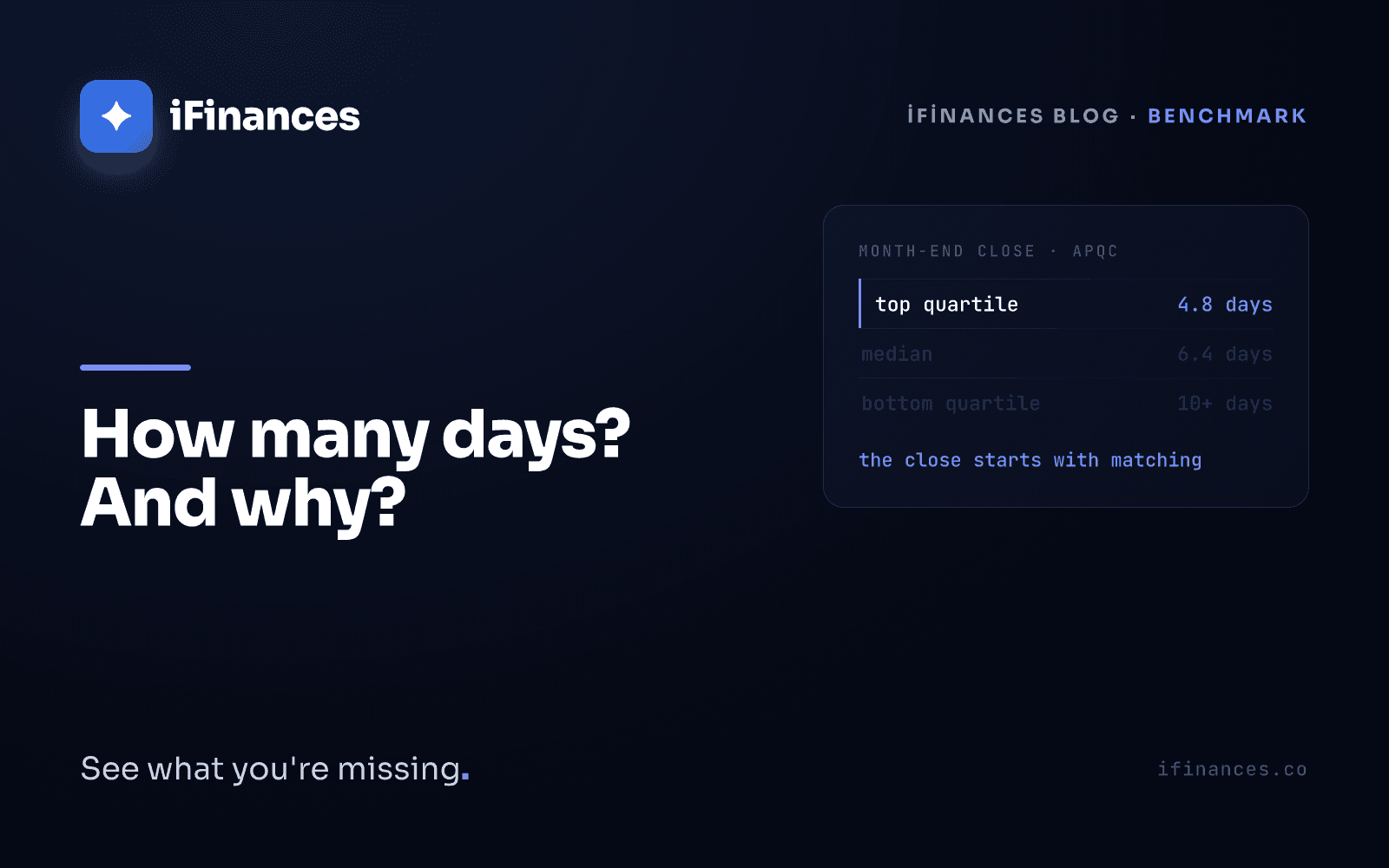
How Many Days Should Your Month-End Close Take?
APQC benchmarks: 4.8 days top quartile, 6.4 median, 10+ bottom. Where the lost days in a close actually go — and why matching on day one moves the calendar.
Duplicate Payments Hide in the Gap Between Your ERP and Your Bank
An invoice-number check fires when the invoice is booked, never when the money leaves. Six routes a duplicate takes around it, and the test for each.
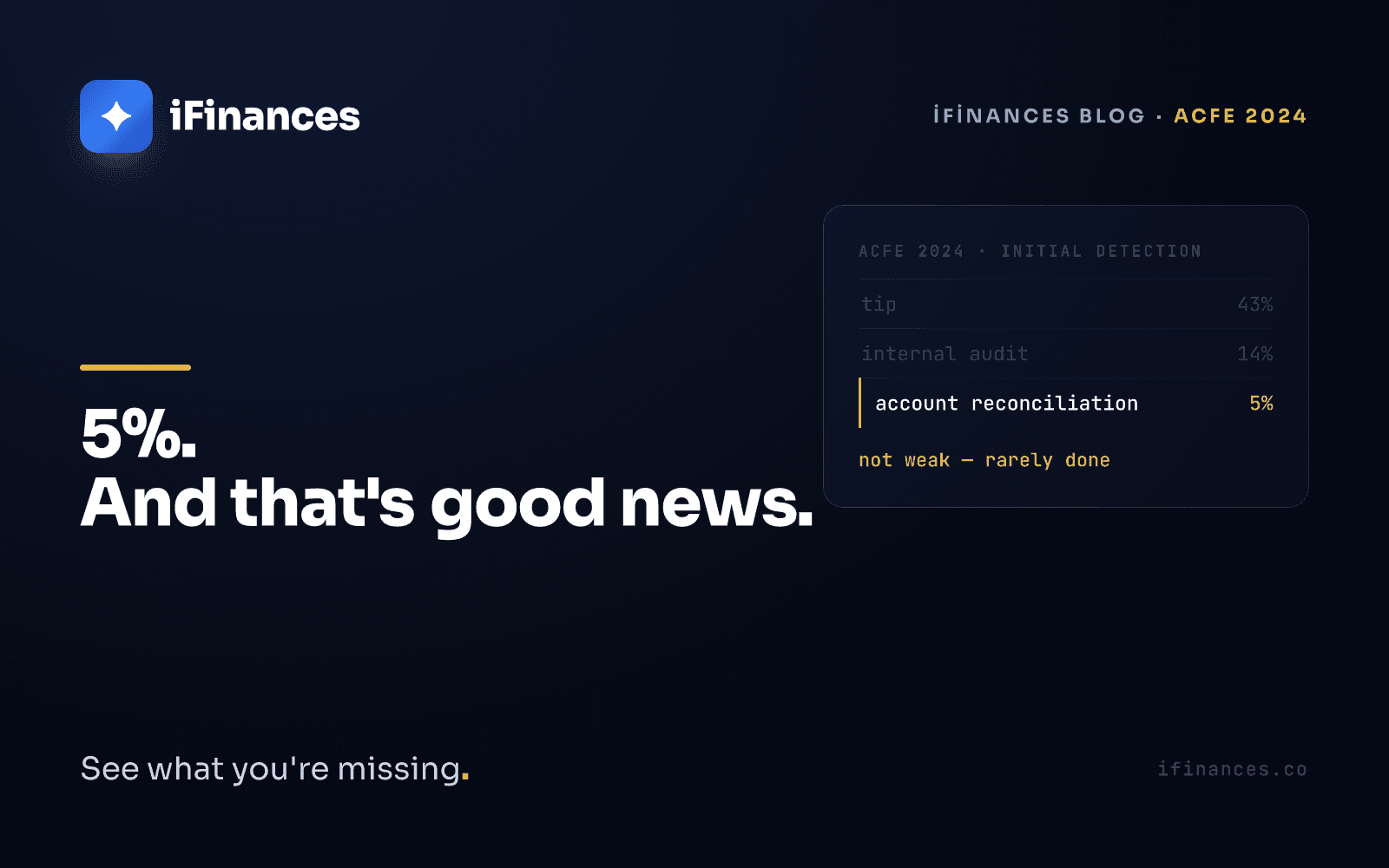
Only 5% of Fraud Is Caught by Reconciliation — and That's the Good News
ACFE 2024: account reconciliation was the initial detection method in 5% of reported cases — as often as accident. That reflects how rarely it runs, not how weak it is.
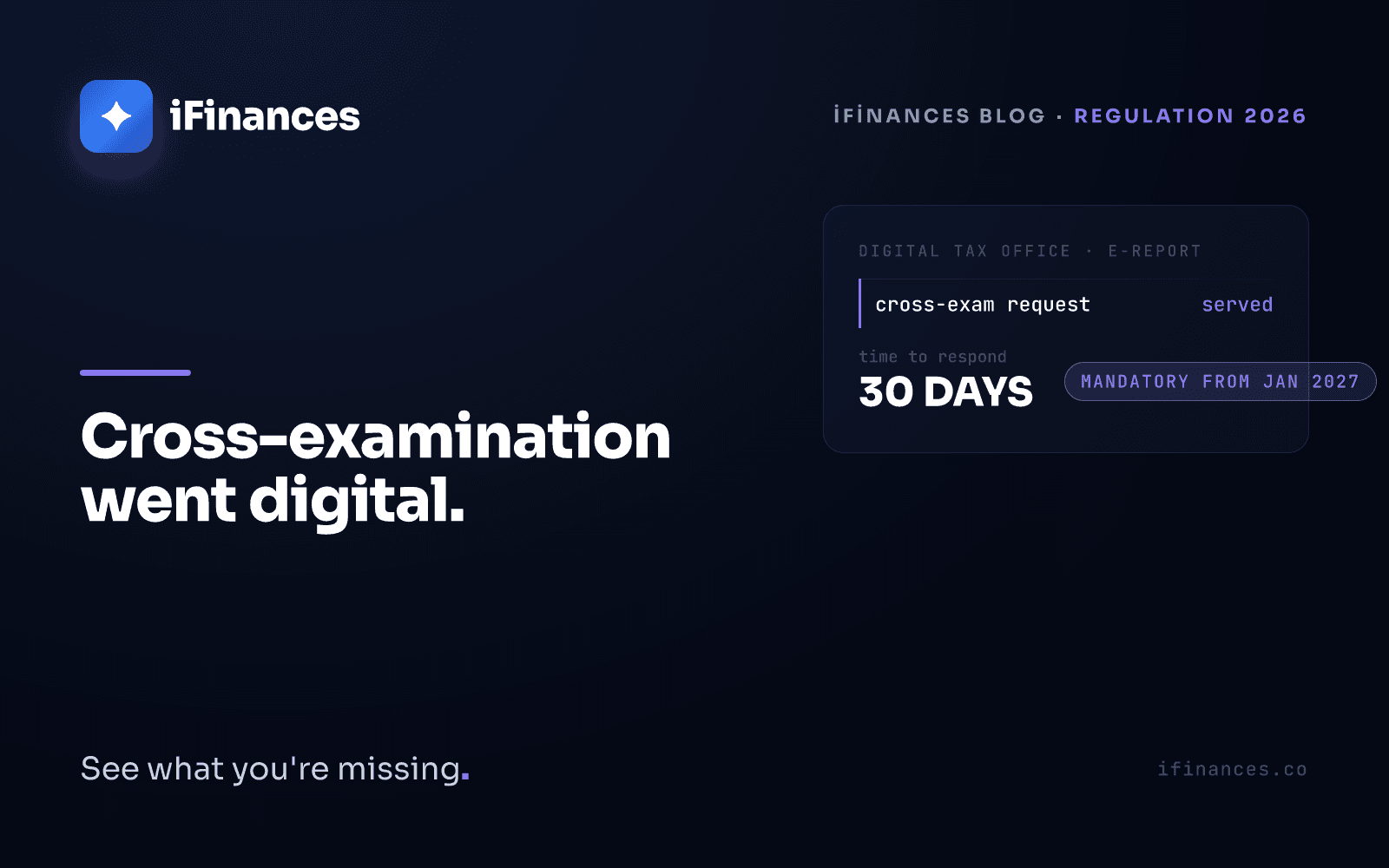
Türkiye's Sworn-in CPA Cross-Examinations Moved Online: Can You Answer Within 30 Days?
Cross-examination reports moved to Türkiye's Digital Tax Office, with the mandate starting 1 January 2027. What the 30-day reply window means for your ledger.
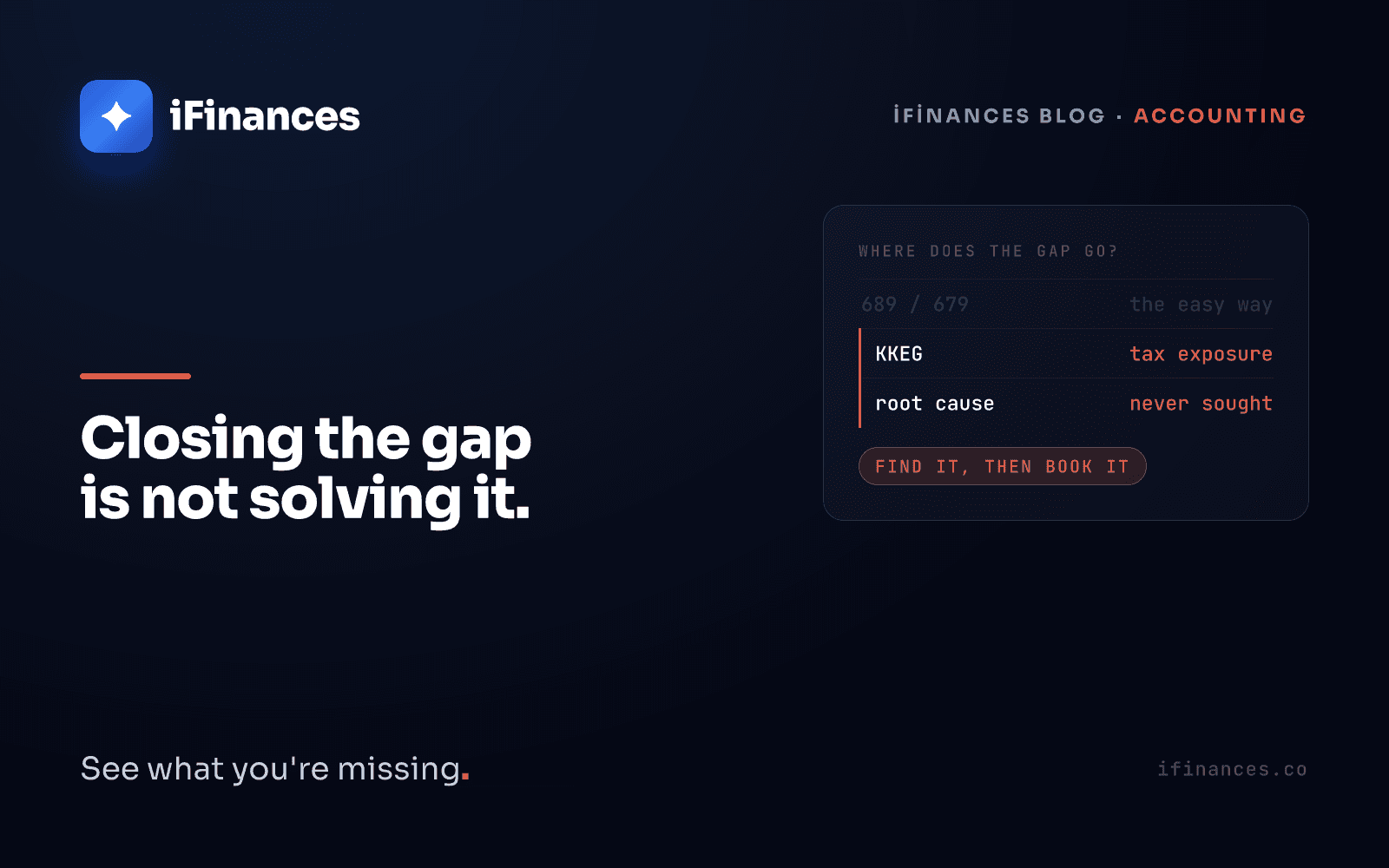
Where Do Reconciliation Differences Go? Find the Cause Before You Book It
On a Turkish ledger a reconciliation gap has five possible causes and five different entries. Classify it before it disappears into non-deductible expense.
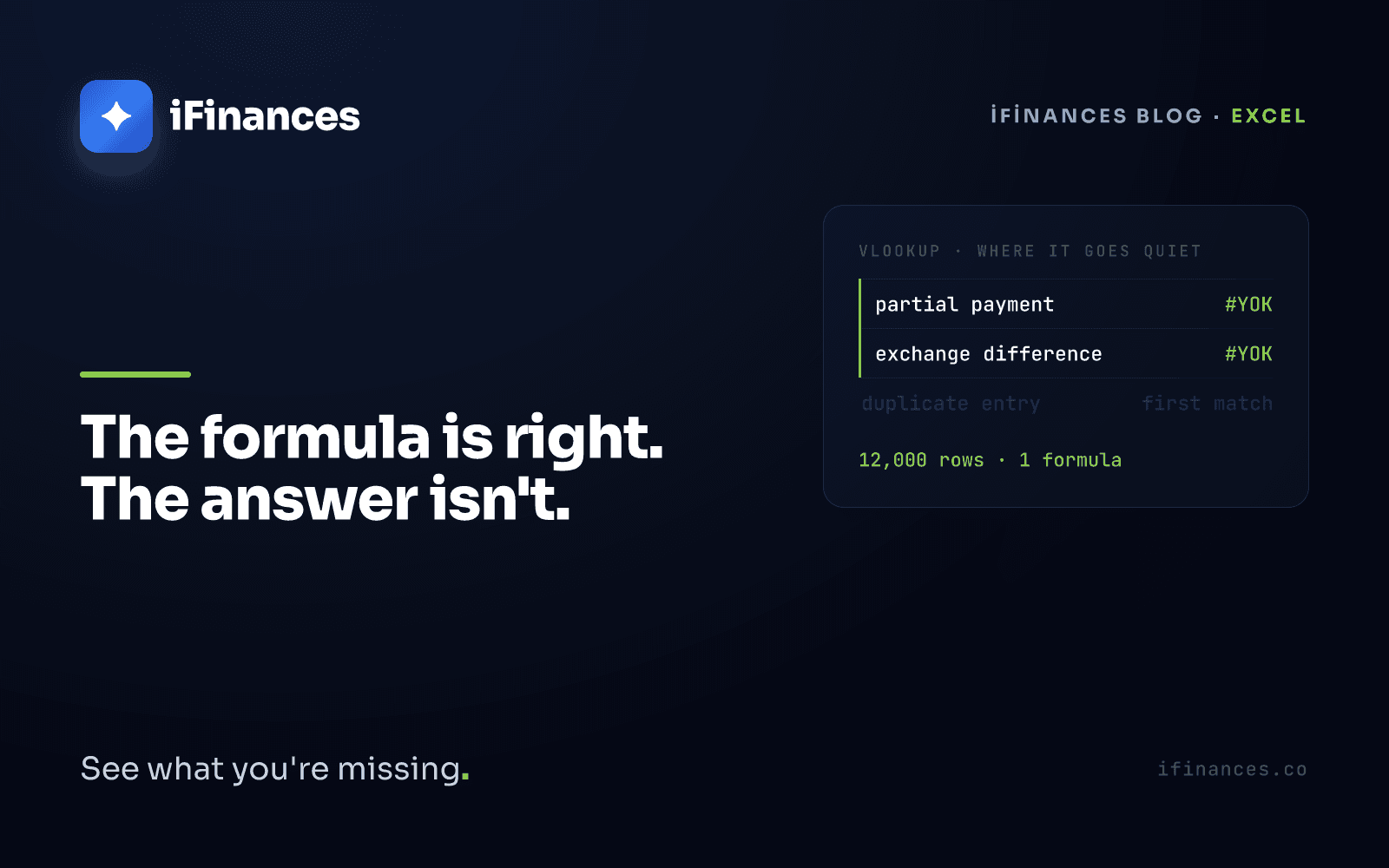
Reconciling in Excel: Six Places VLOOKUP Goes Quiet
VLOOKUP never returns a wrong answer — it just goes quiet. Partial payments, lump sums, rounding, FX, duplicates, free text: where spreadsheet reconciliation breaks.
Who Sent This Transfer? Five Ways to Tie an Unidentified Bank Line to an Account
A statement line with no owner: the sender name, amount and date, invoice combinations, your own history, and asking. Five routes out of unapplied cash, and where each fails.
Credit Balances in Receivables and Debit Balances in Payables: 7 Questions First
Receivables in credit, payables in debit. Seven questions to ask before you post the year-end reclassification entry, and how to tell the answers apart.
Open Item Clearing Is Not Reconciliation: What SAP Closes and What It Never Checks
Clearing closes your ledger against itself and never looks at the counterparty's books. What it proves, what it cannot, and what the gap costs a group.
How to Export a Customer or Vendor Statement from SAP, Logo, Mikro and Netsis
How to get a statement out of SAP, Logo, Netsis or Mikro in a form that can actually be reconciled: the columns that matter and the six export traps.
Reconciliation Letter Template 2026: Free Word + Excel Downloads and the TTK 94 Rules
Download a reconciliation letter template with no sign-up: Word (3 variants) + Excel form, field-by-field guidance, and Türkiye's TTK 94 one-month rule.
Türkiye Abolished the Ba-Bs Forms: What Replaces Cross-Checking in 2026?
Türkiye scrapped the Ba-Bs forms with Communiqué No. 565. The state already receives the same data via e-invoices — but who finds the gap between two ledgers now?
No Reply to a Reconciliation Letter: TTK Article 94 and Silence
No reply to a reconciliation letter in Türkiye? How TTK Article 94's one-month objection window works, which channels count, and what silence really means.
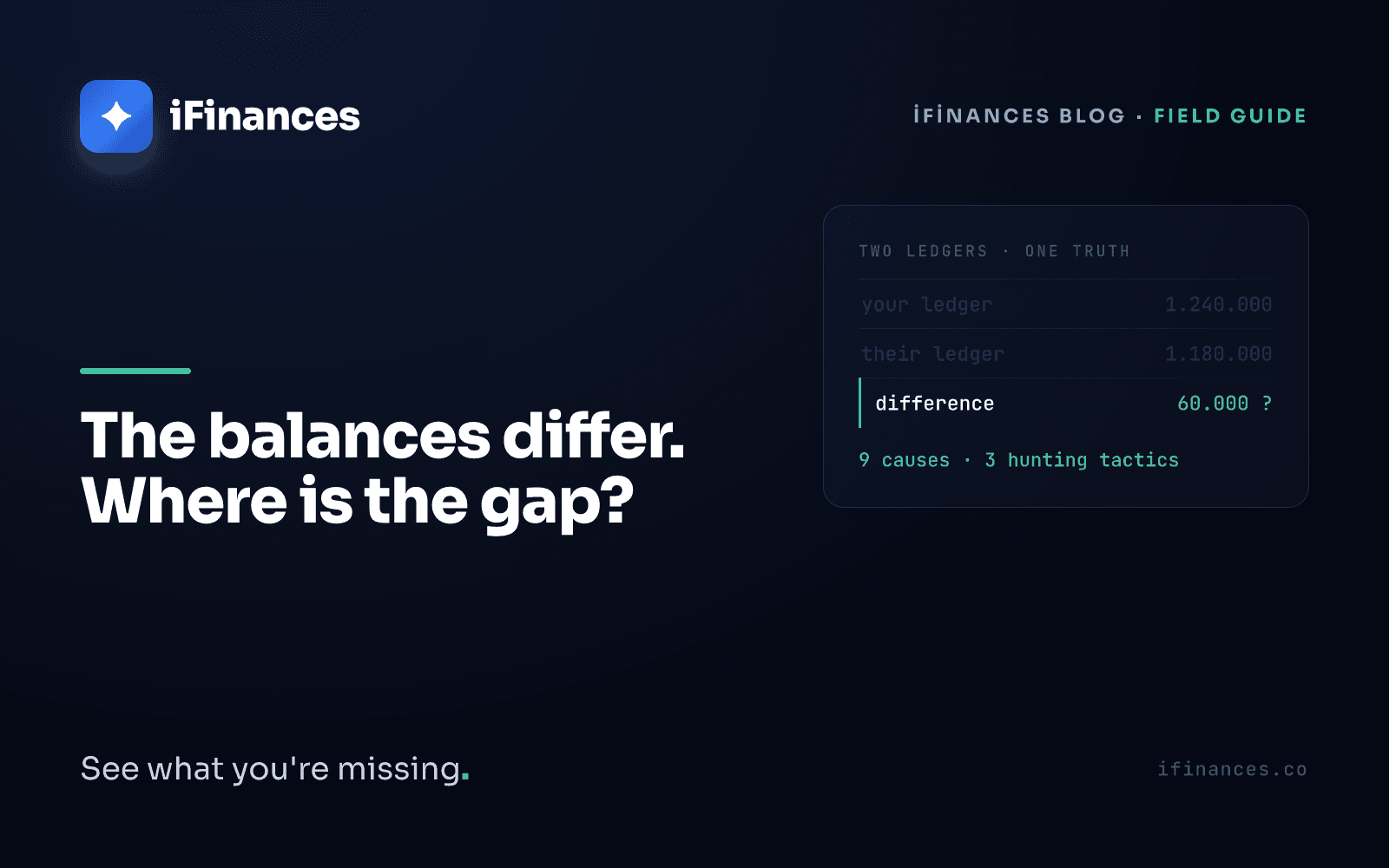
The Balances Don't Match: 9 Causes of Reconciliation Differences
Balances don't match? Nine typical causes of an account balance mismatch, four quick tests to narrow the gap, and a correction flow that avoids risky shortcuts.
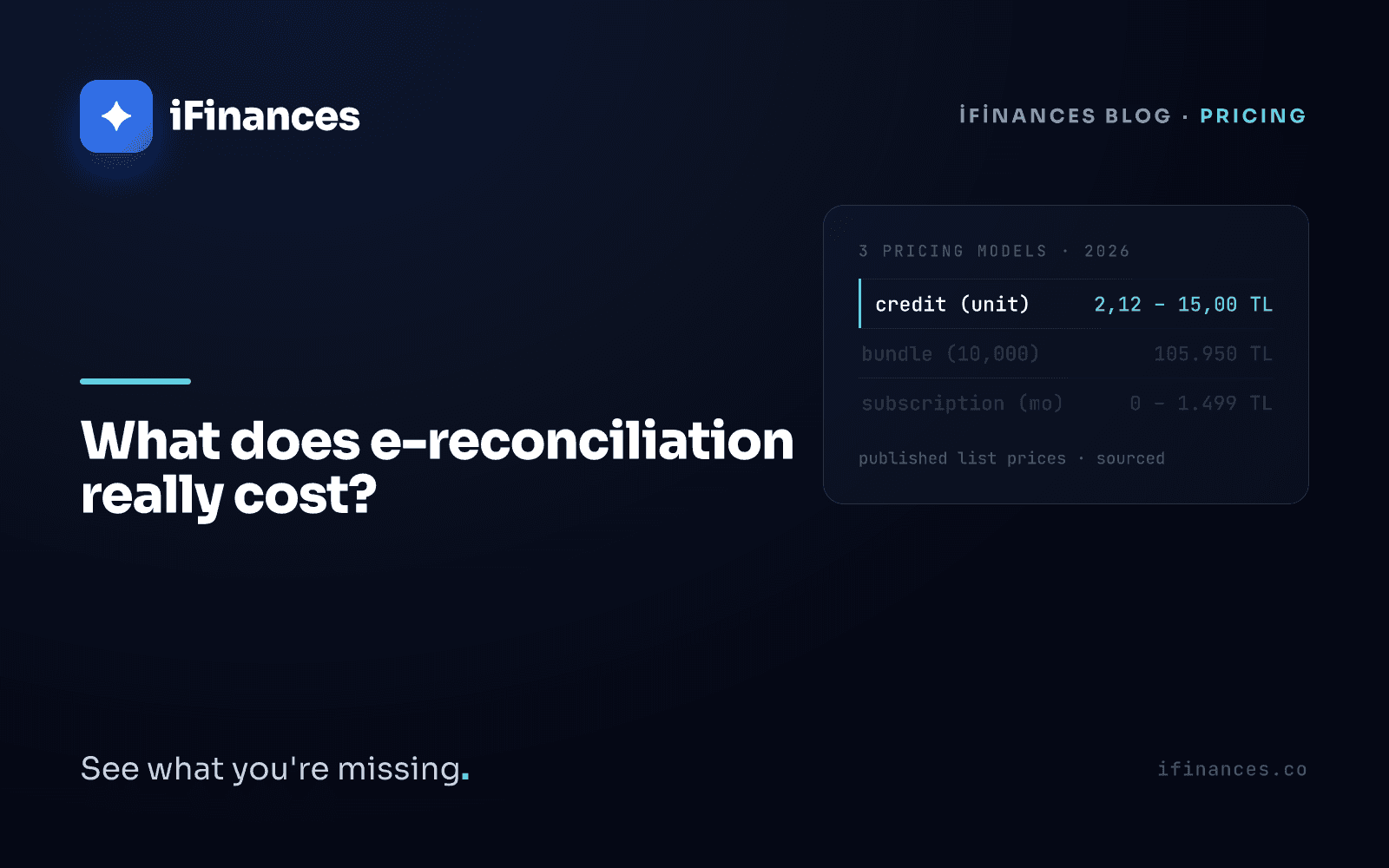
E-Reconciliation Pricing in Türkiye (2026): Credits, Packages, and What It Really Costs
Credits, packages, subscriptions: what e-reconciliation costs in Türkiye in 2026 — published list prices, a sample cost calculation, and the hidden line items.
Reconciliation with Paraşüt: the Workflow, the Limits, and Your Automation Options
How reconciliation works in Paraşüt: the official workflows, the Kolaymutabakat add-on, where manual work remains, and how to automate matching on top.
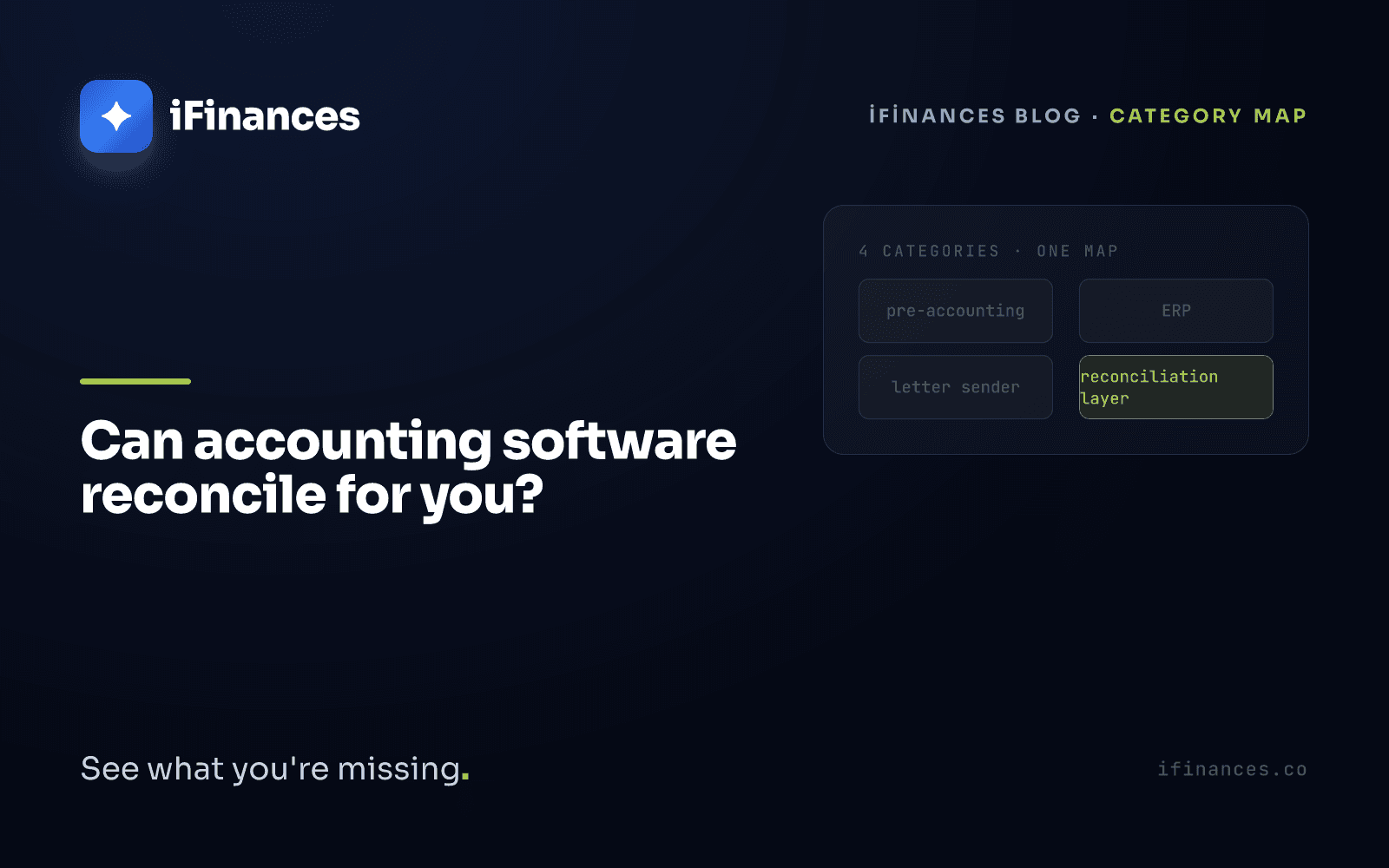
Can Your Accounting Software Do Reconciliation? Pre-Accounting Tools, ERP Modules, and Their Real Limits
Can accounting software actually reconcile? An honest capability map of Türkiye's pre-accounting tools and ERP modules — and where their real limits begin.
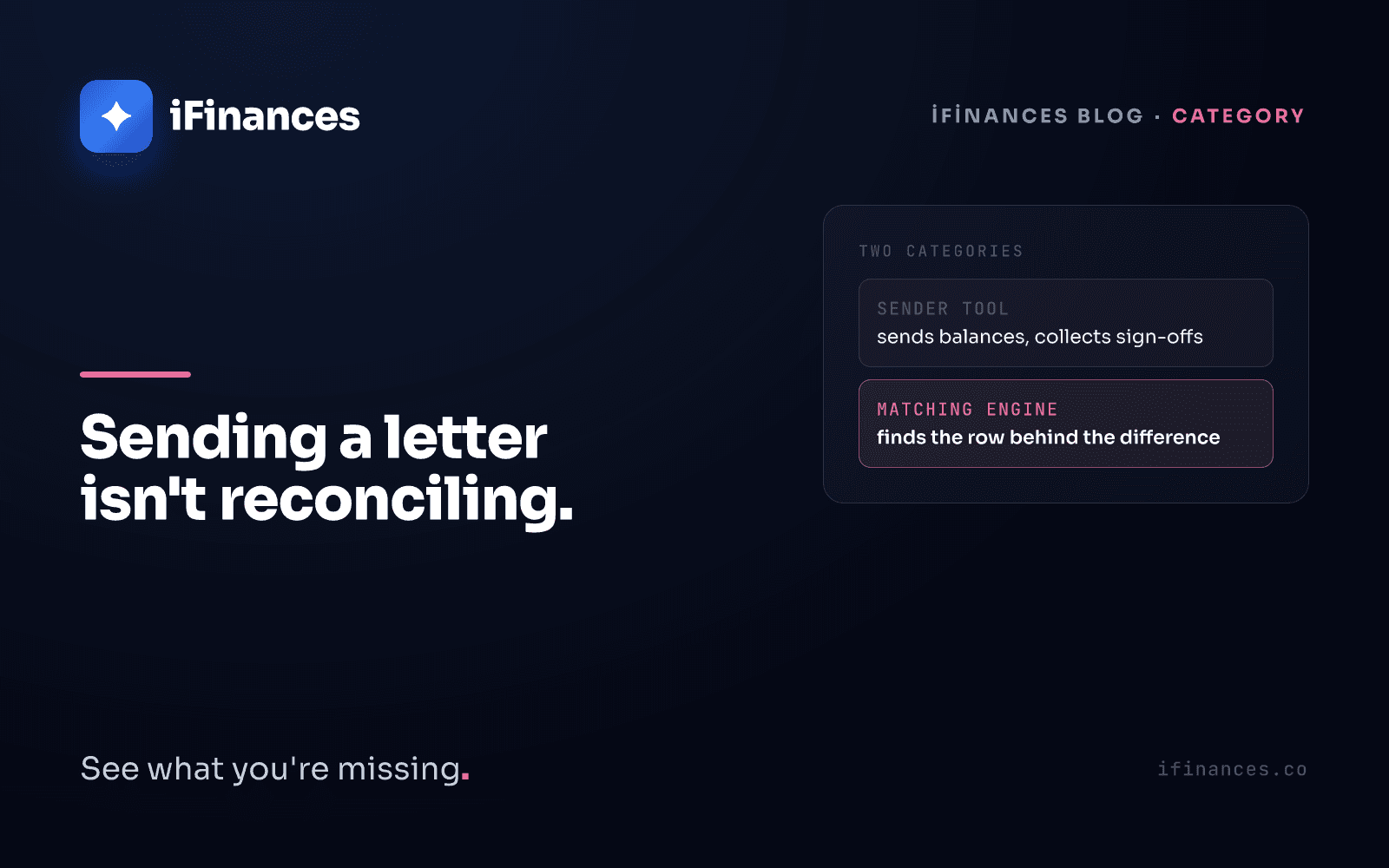
The First Question About Reconciliation Software: Does It Send Letters, or Does It Actually Match?
In Türkiye, 'reconciliation software' usually means a letter-sending tool. How matching engines differ — and which category your close really needs.
How to Do a Bank Reconciliation, Step by Step: the Excel Method and When to Automate
How to do a bank reconciliation step by step: the seven-step process, the two-column Excel method, a free no-signup template, and when to automate.
Reconciliation Email Templates: 5 Ready-to-Use Drafts for First Contact, Reminders, Objections, and Confirmation
Five ready reconciliation email templates — first contact, reminders, objection, confirmation — plus timing rules and email's legal standing in Türkiye.
The Year-End Reconciliation Calendar: a Week-by-Week Checklist from November to January
Don't cram year-end reconciliation into the last week of December: a week-by-week calendar from November to January, anchored in TTK Article 94.
What Is an Account Statement and How Do You Read It? Debit, Credit, Balance, and Comparing Two Ledgers
How to read an account statement: debit, credit and running balance, the mirror rule, reverse balances, and comparing two ledgers line by line.
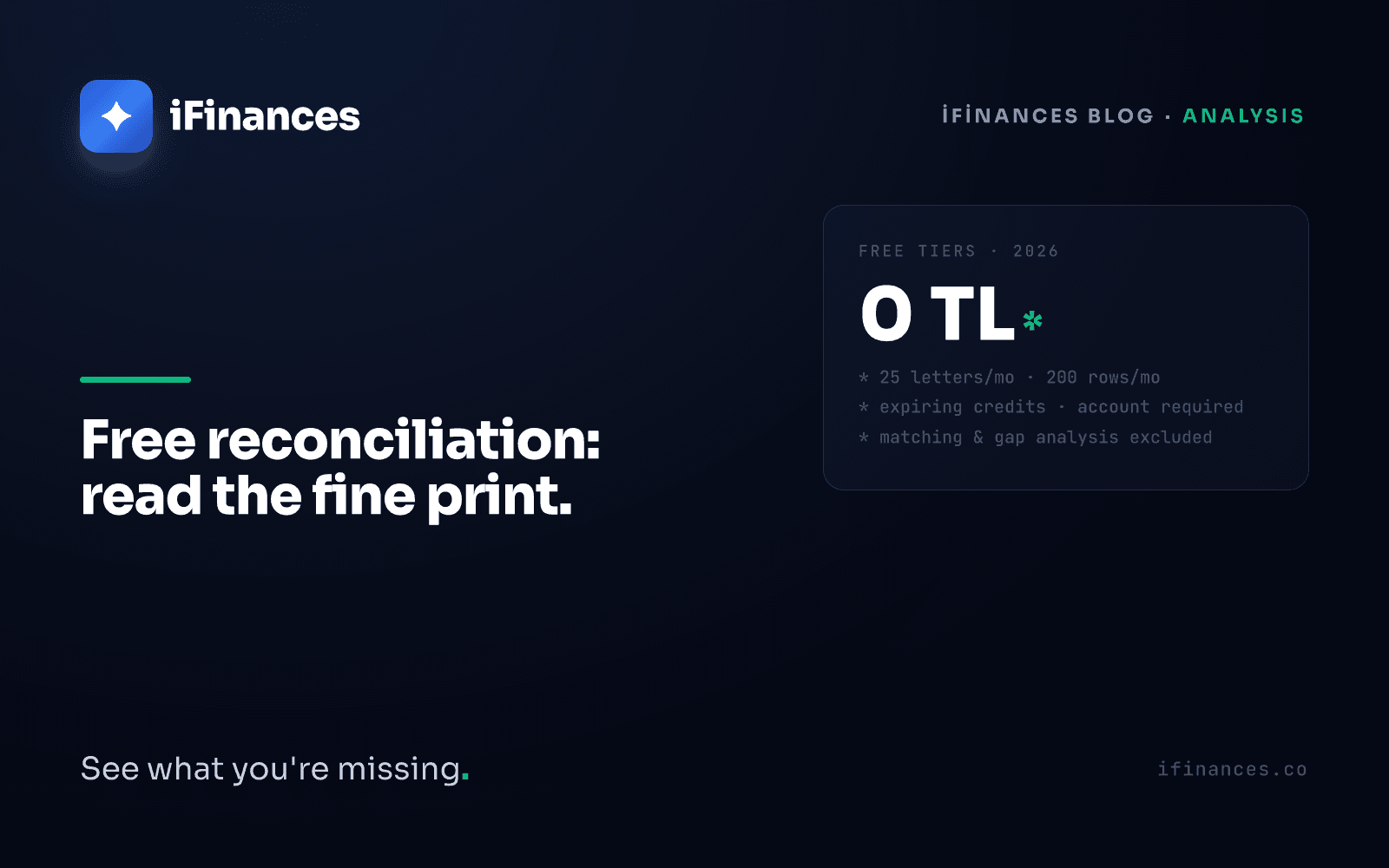
Is There Really Free Reconciliation Software? The 2026 Options and Their Hidden Limits
Is free reconciliation software real? Türkiye's 2026 free tiers, their quotas and fine print, and a simple test for how far free actually gets you.
A Ledger Is a Promise
In November 2022, the team unwinding FTX could not assemble an accurate list of the company's bank accounts. Before software and automation, a finance function's first deliverable is a trustworthy list — and reconciliation is how that list earns its trust.
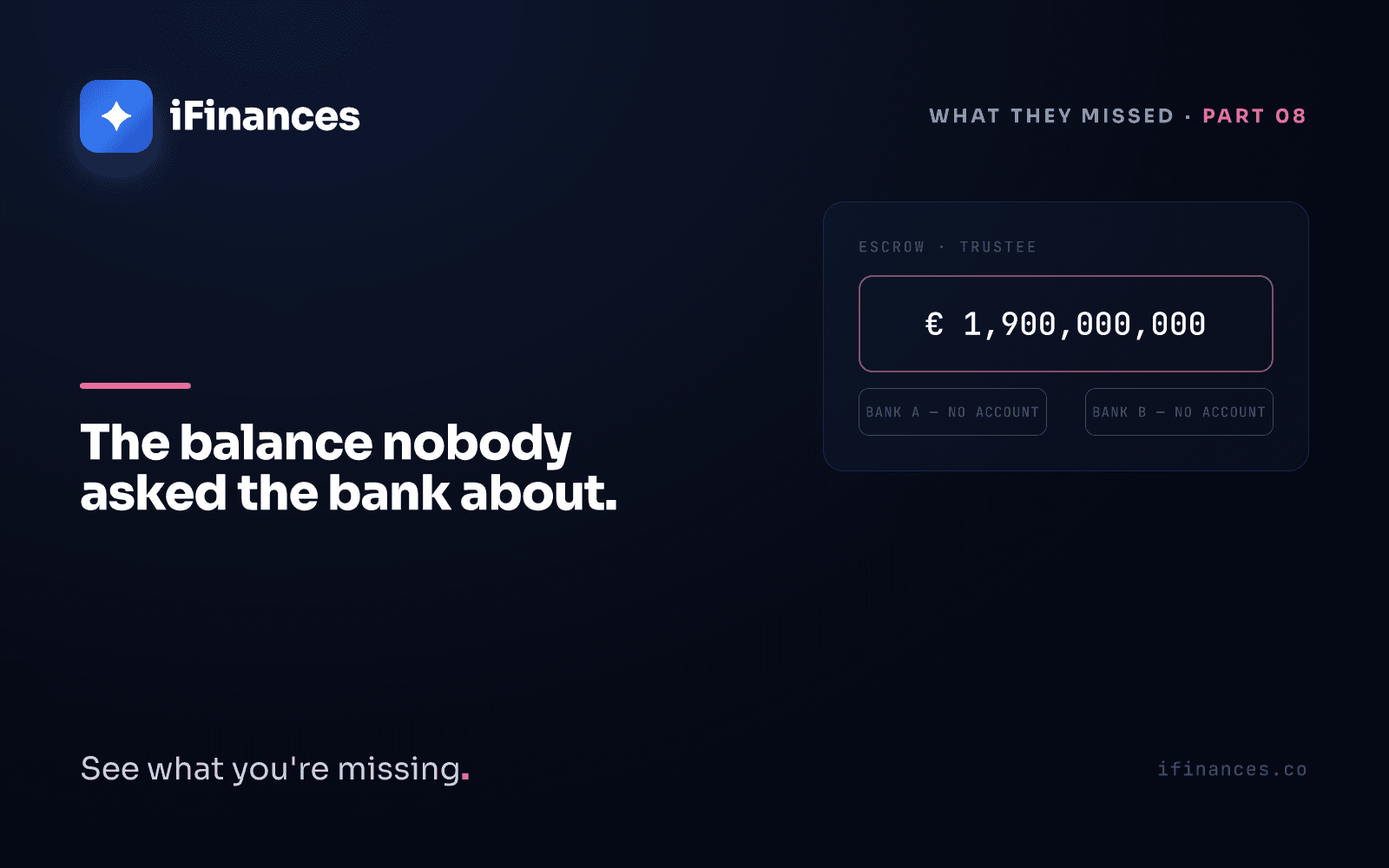
The Balance Nobody Asked the Bank About
In June 2020, roughly a quarter of a DAX company's balance sheet turned out to exist only on paper: €1.9 billion in escrow accounts that two Philippine banks, once finally asked directly, said had never been opened. Wirecard's collapse is a lesson in the distance between a document about a balance and the balance itself.
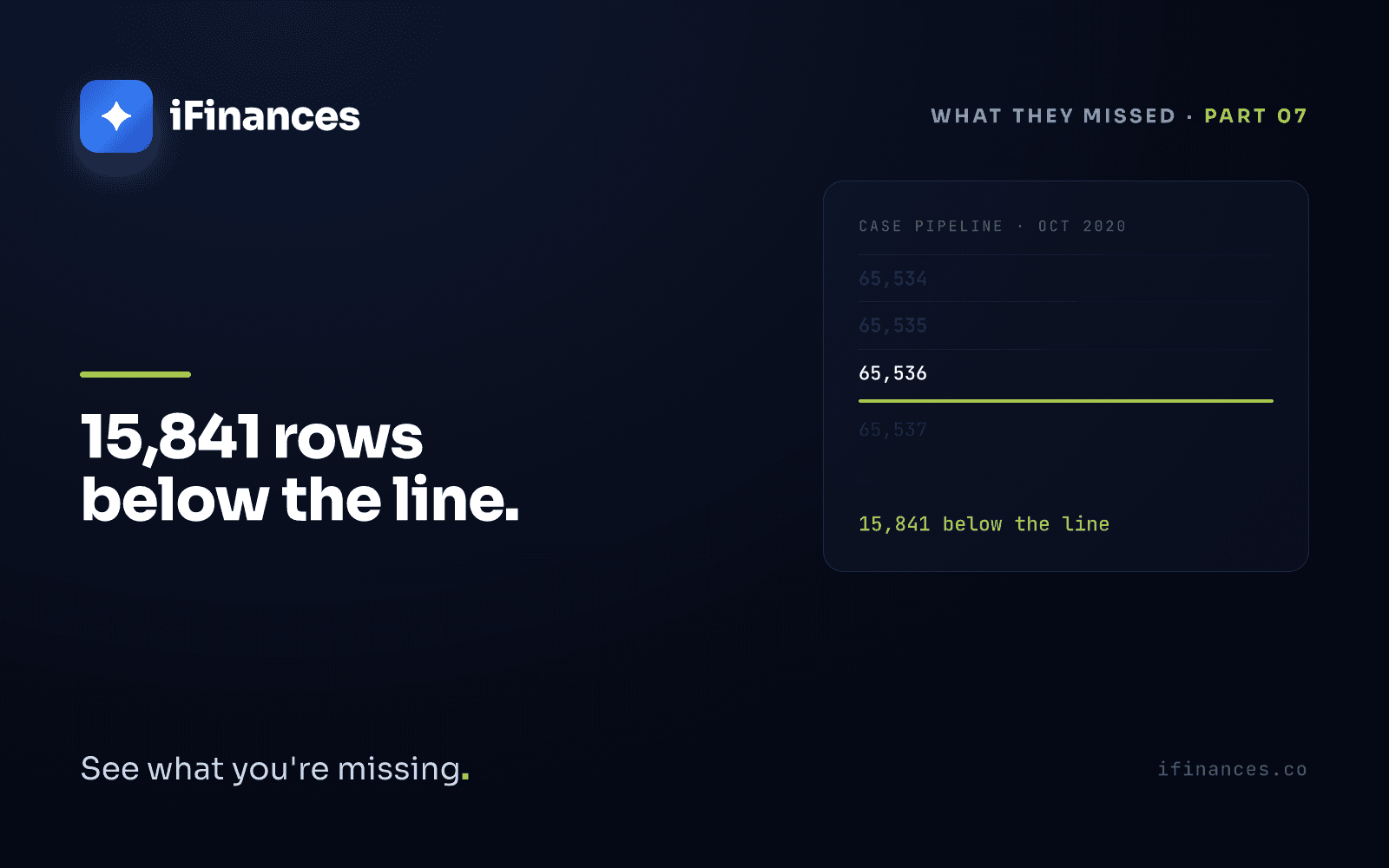
15,841 Rows Below the Line
For eight days in autumn 2020, England's daily COVID reports were missing 15,841 positive cases — because a pipeline wrote into a file format that stops at row 65,536. The format kept its promise; nothing watched the totals.
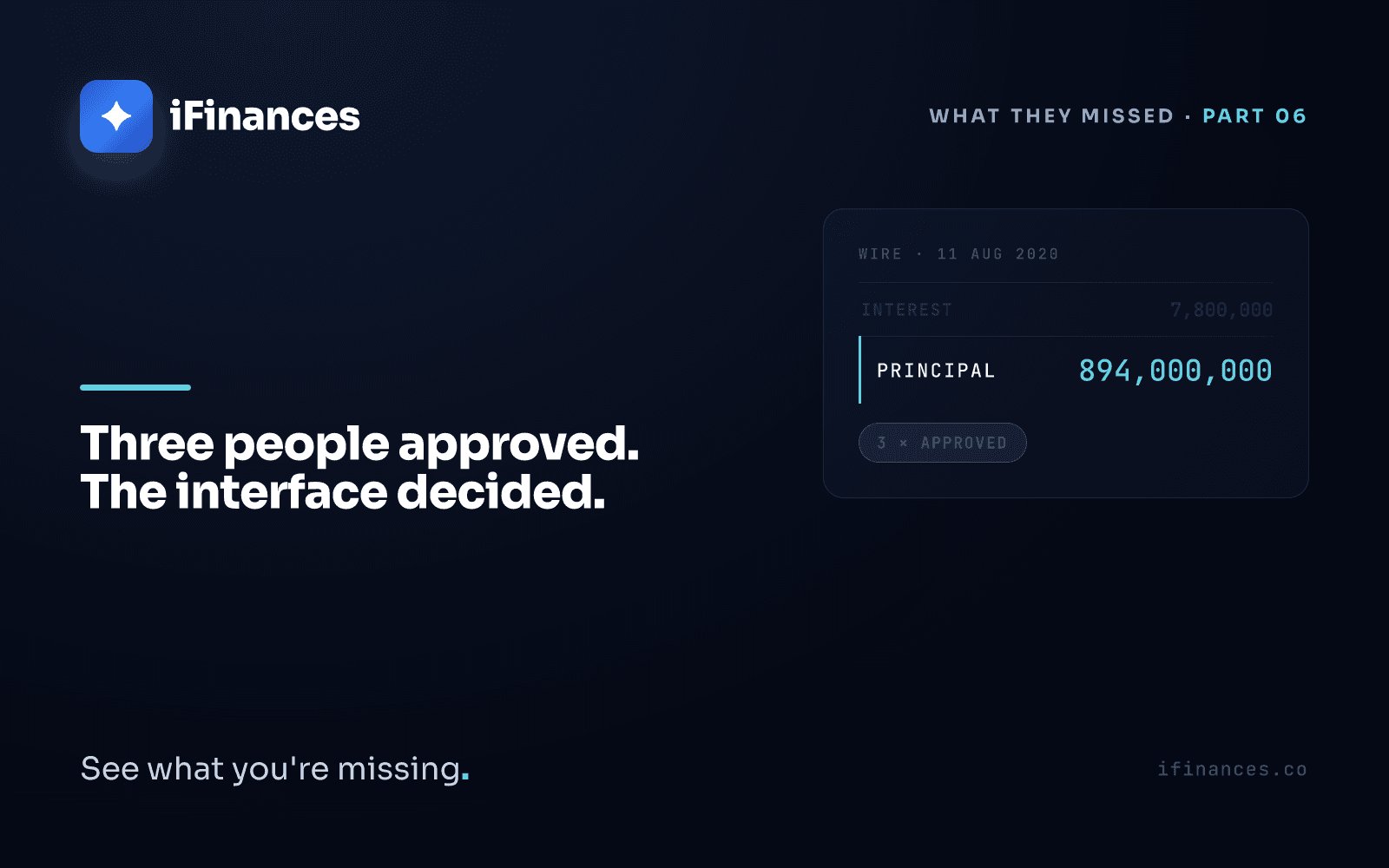
Three People Approved. The Interface Decided.
On 11 August 2020, Citibank meant to wire roughly $7.8 million of interest to Revlon's lenders and sent roughly $894 million of principal instead — after three people approved. What the Flexcube screen showed them, and why approval only counts as a control when the approver can see the consequence.
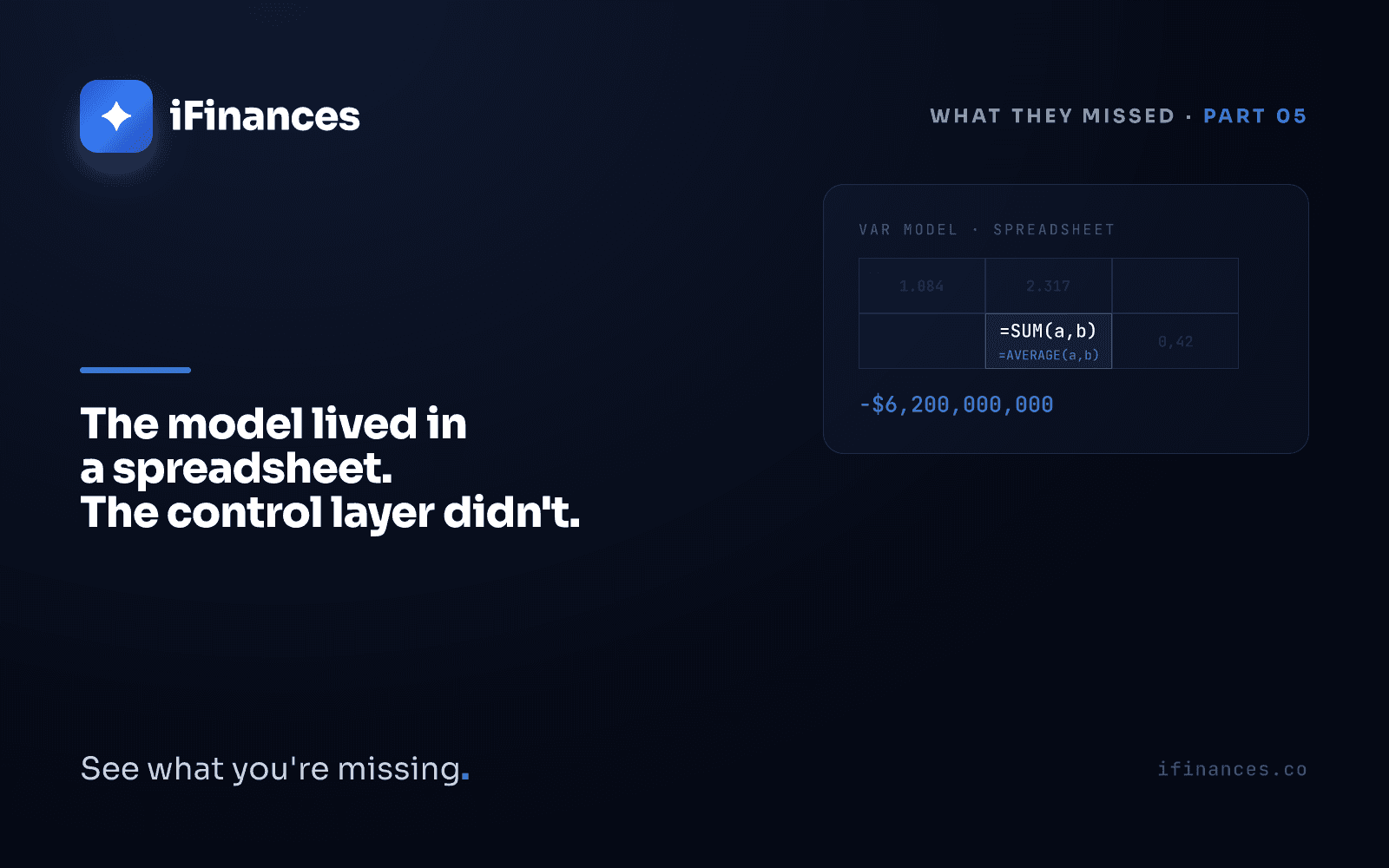
The Model Lived in a Spreadsheet. The Control Layer Didn't.
JPMorgan's 2012 London Whale loss reached at least $6.2 billion, and the bank's own report traced its risk model to Excel spreadsheets completed by hand — with one formula dividing by a sum instead of an average. The spreadsheet did what it was told; nothing was watching what it was told.
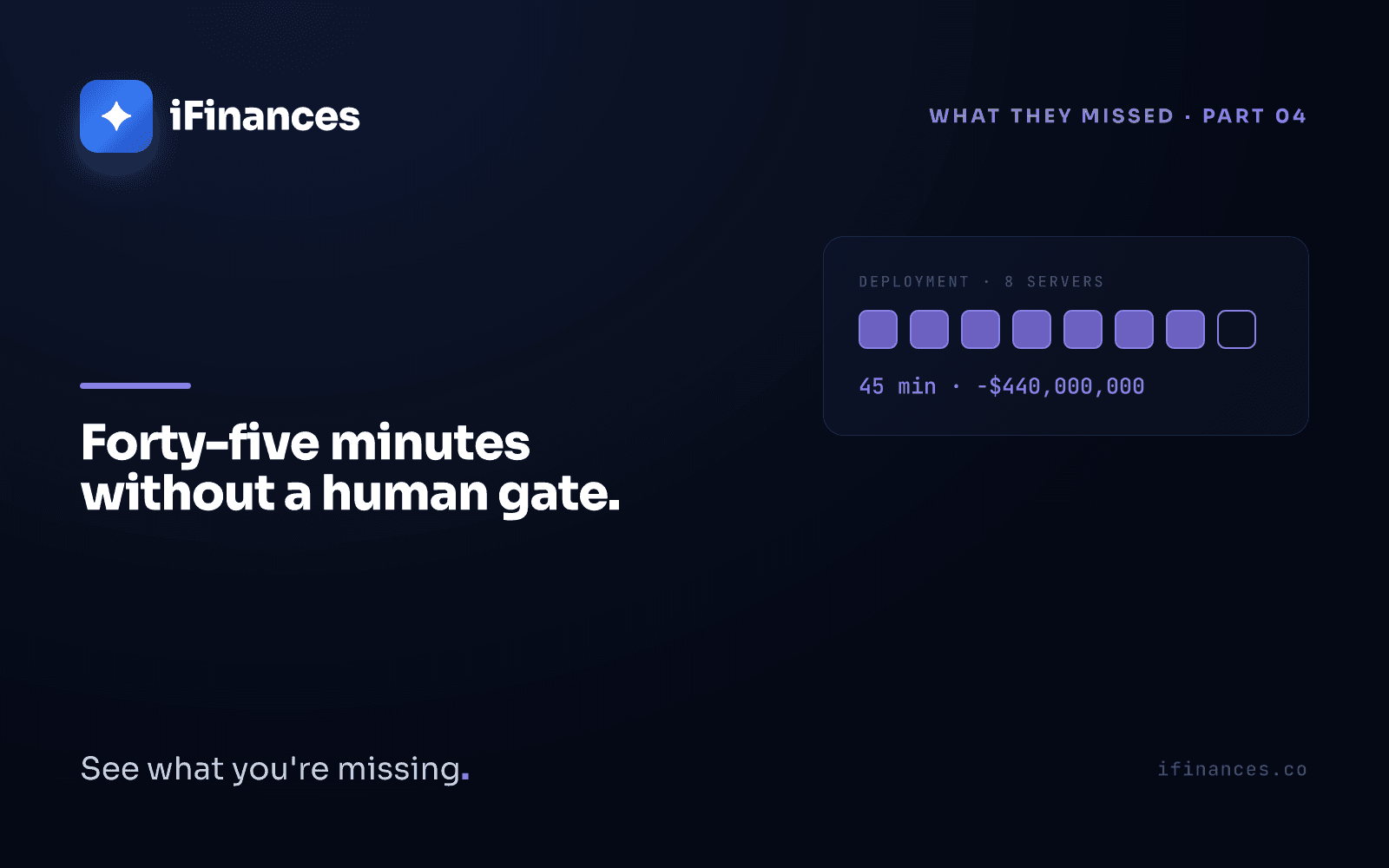
Forty-Five Minutes Without a Human Gate
On 1 August 2012, a missed server and a repurposed flag turned 212 customer orders into more than 4 million executions in roughly 45 minutes. Knight Capital's $440 million morning is a story about a missing checkpoint — the moment where a machine's output should wait for a human yes.
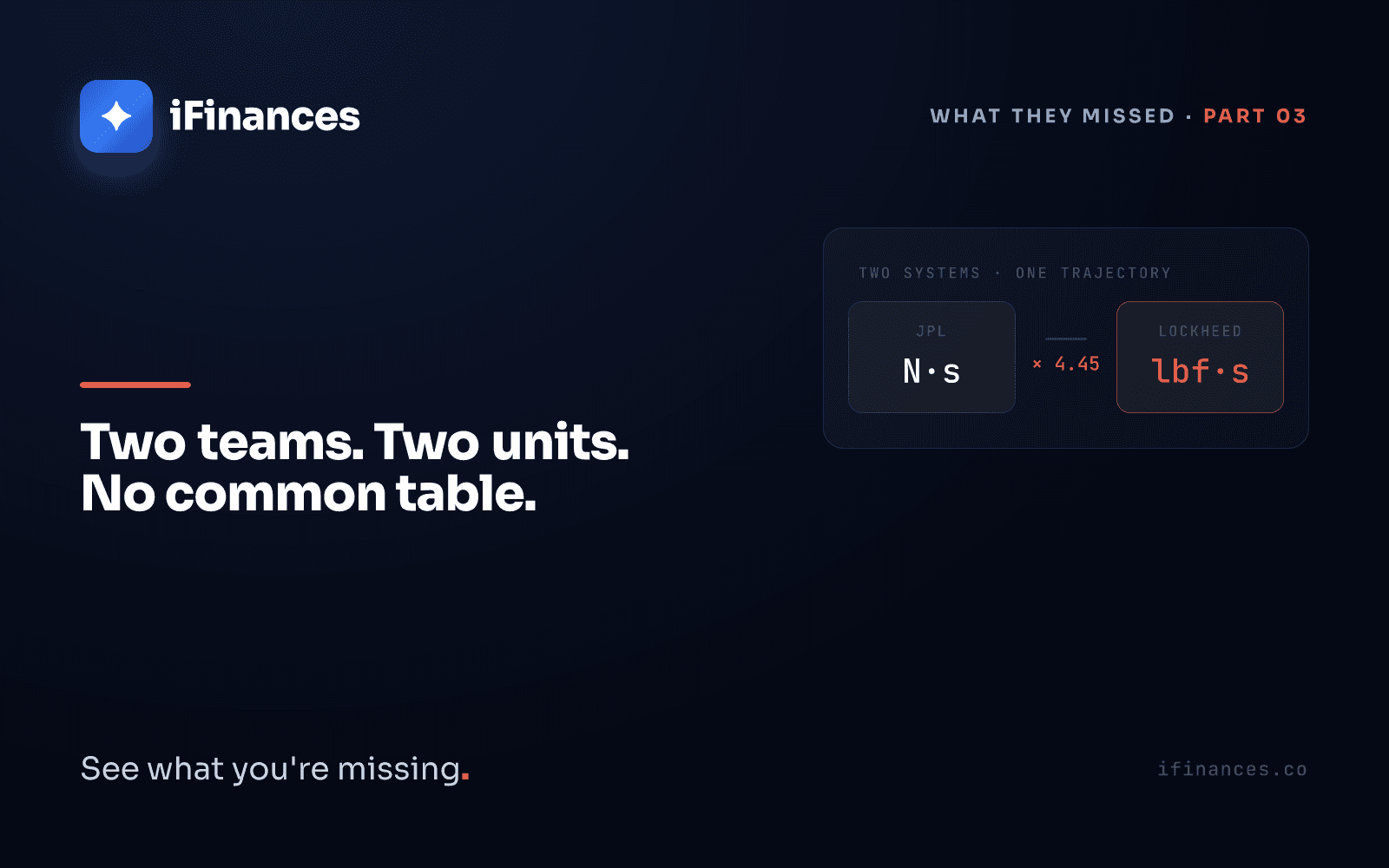
Two Teams, Two Units, No Common Table
On 23 September 1999, the Mars Climate Orbiter slipped behind Mars and never called back. Both teams' numbers were internally correct — what was missing was the layer that translates two sources into one table, a job every finance team faces whenever euros meet lira.
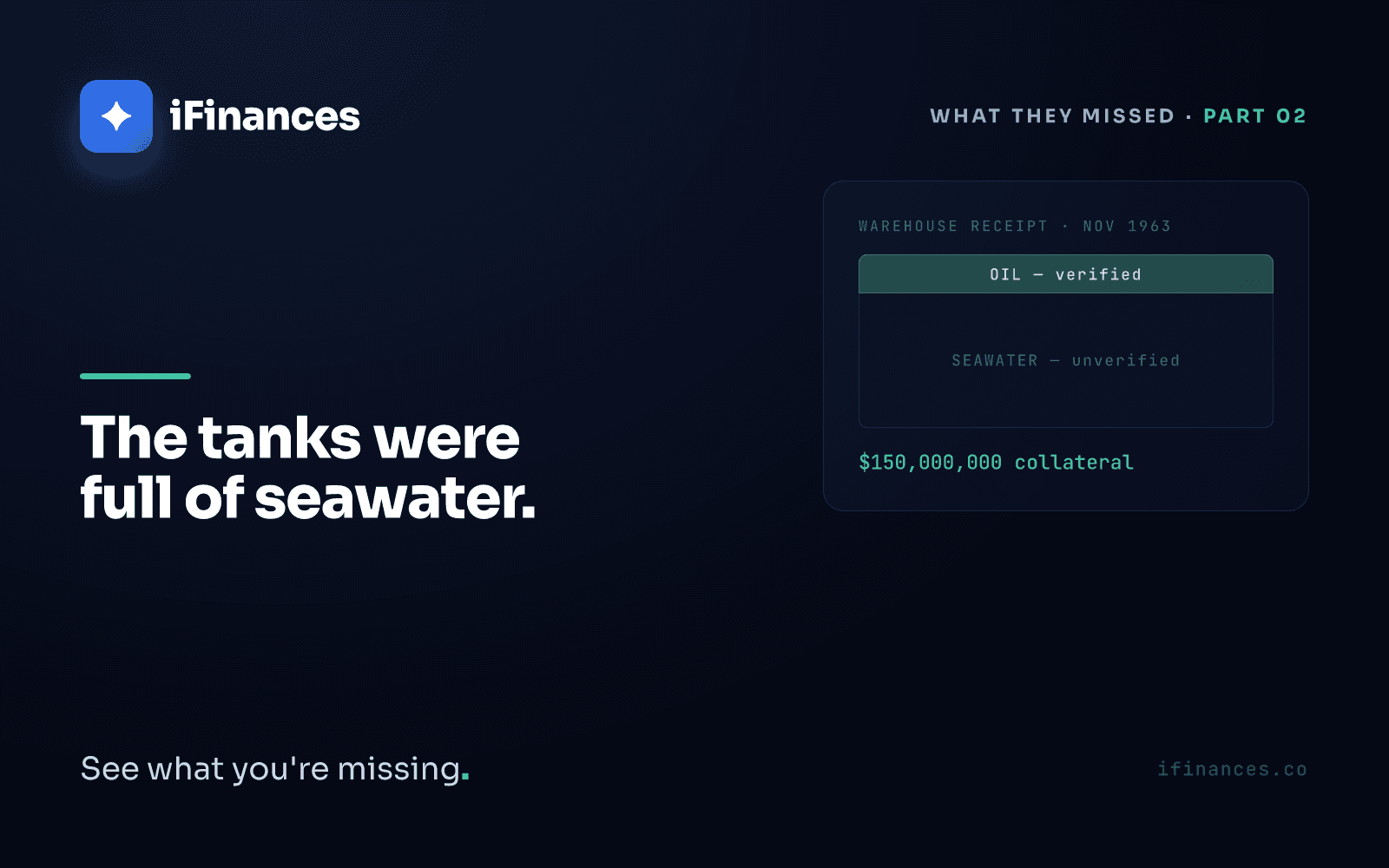
The Tanks Were Full of Seawater
In November 1963, 51 lenders discovered that the warehouse receipts in their vaults described soybean oil that largely did not exist — the tanks in Bayonne held seawater under a thin layer of oil. What the salad oil swindle teaches about single-source numbers and the discipline of cross-reconciliation.
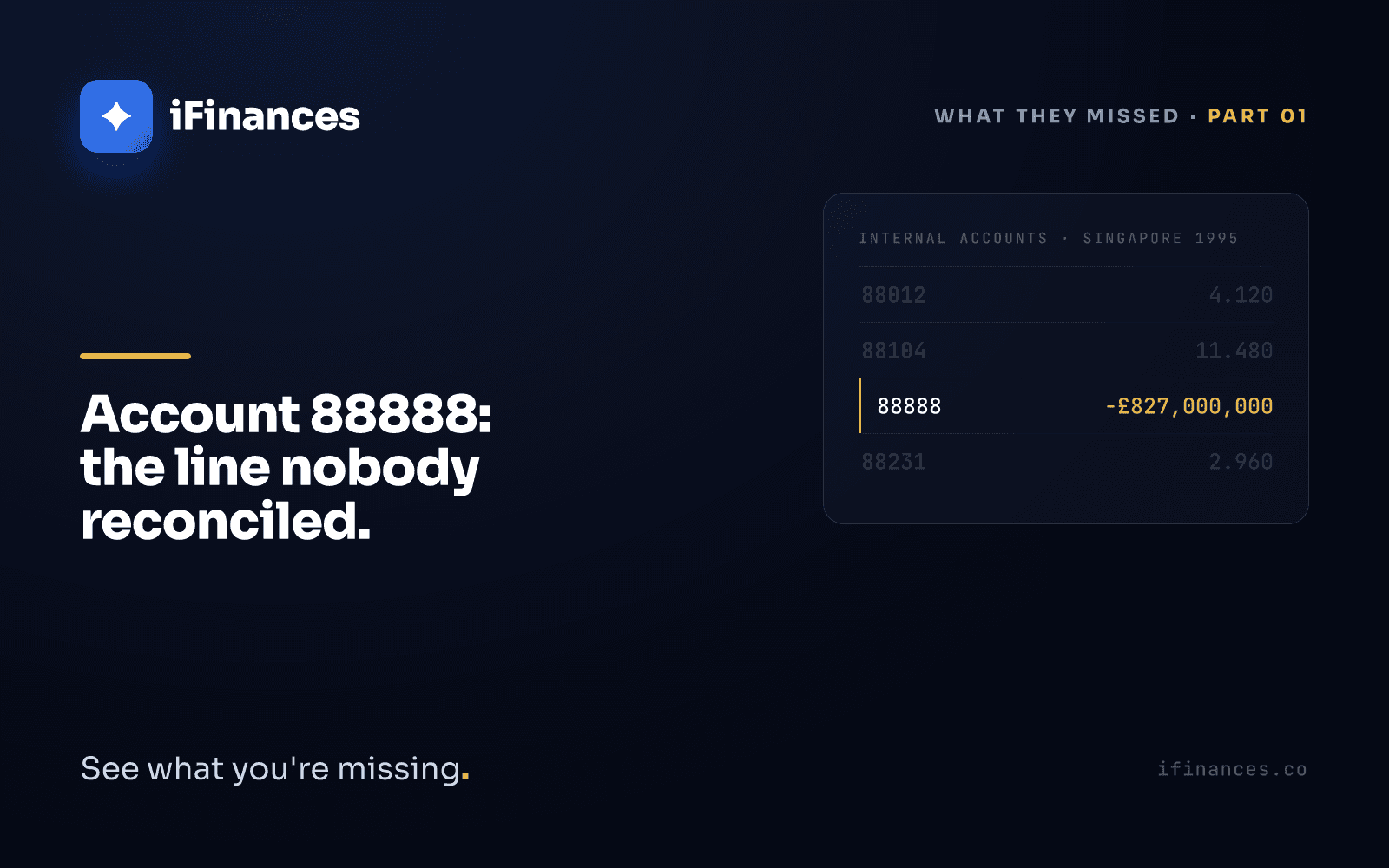
Account 88888: The Line Nobody Reconciled
In 1995, a 233-year-old bank collapsed under £827 million in losses recorded faithfully in its own ledger — in an internal error account head office never reconciled. What Barings teaches about visibility, segregation of duties, and the discipline of looking at every line.

What is iFinances? First, meet your opponent.
For years you have been playing the same invisible opponent every month — and you never gave it a name. The answer to "what is iFinances?" begins with a machine that sits down on your side of the table.
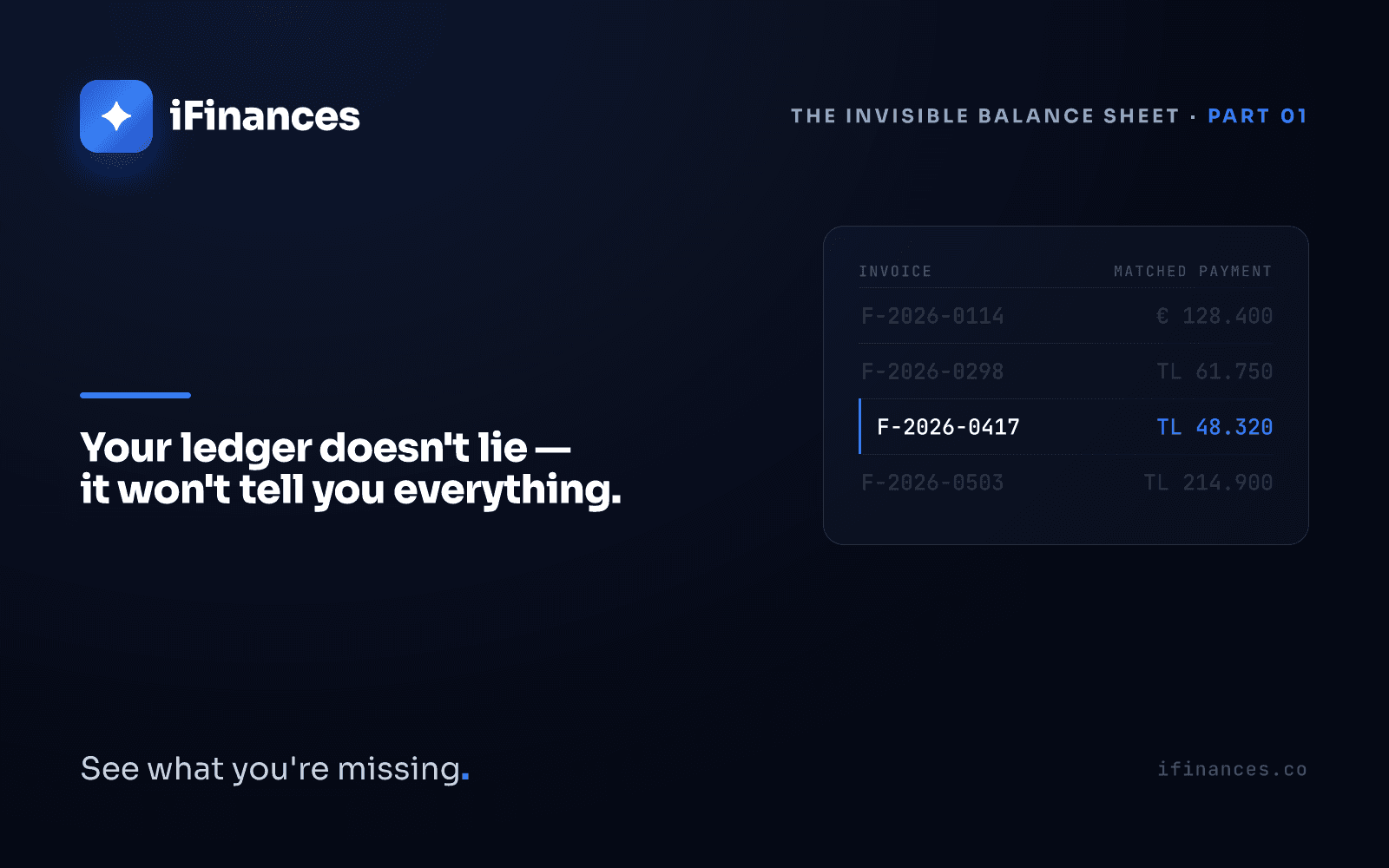
The Invisible Balance Sheet: Your Ledgers Don't Lie
At close, the balance sheet looks balanced. But the thin gap between the record and reality — the invisible balance sheet — is most companies' costliest number.
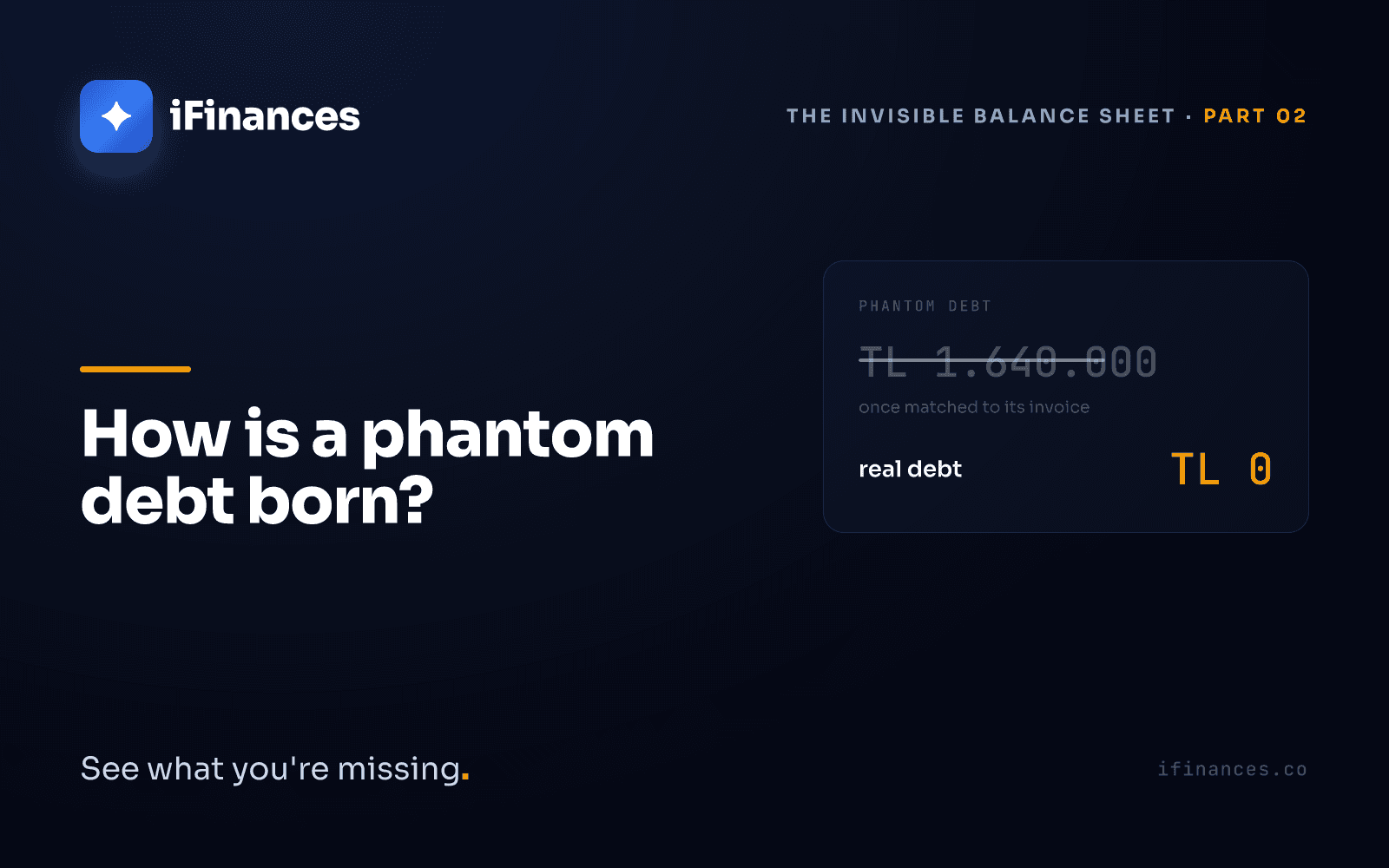
What Is Phantom Debt? Why a Paid Invoice Still Shows Open
Your ledger shows 1.6M in receivables, but the debt doesn't exist: it was paid, just never matched to its invoice. The anatomy of phantom debt.
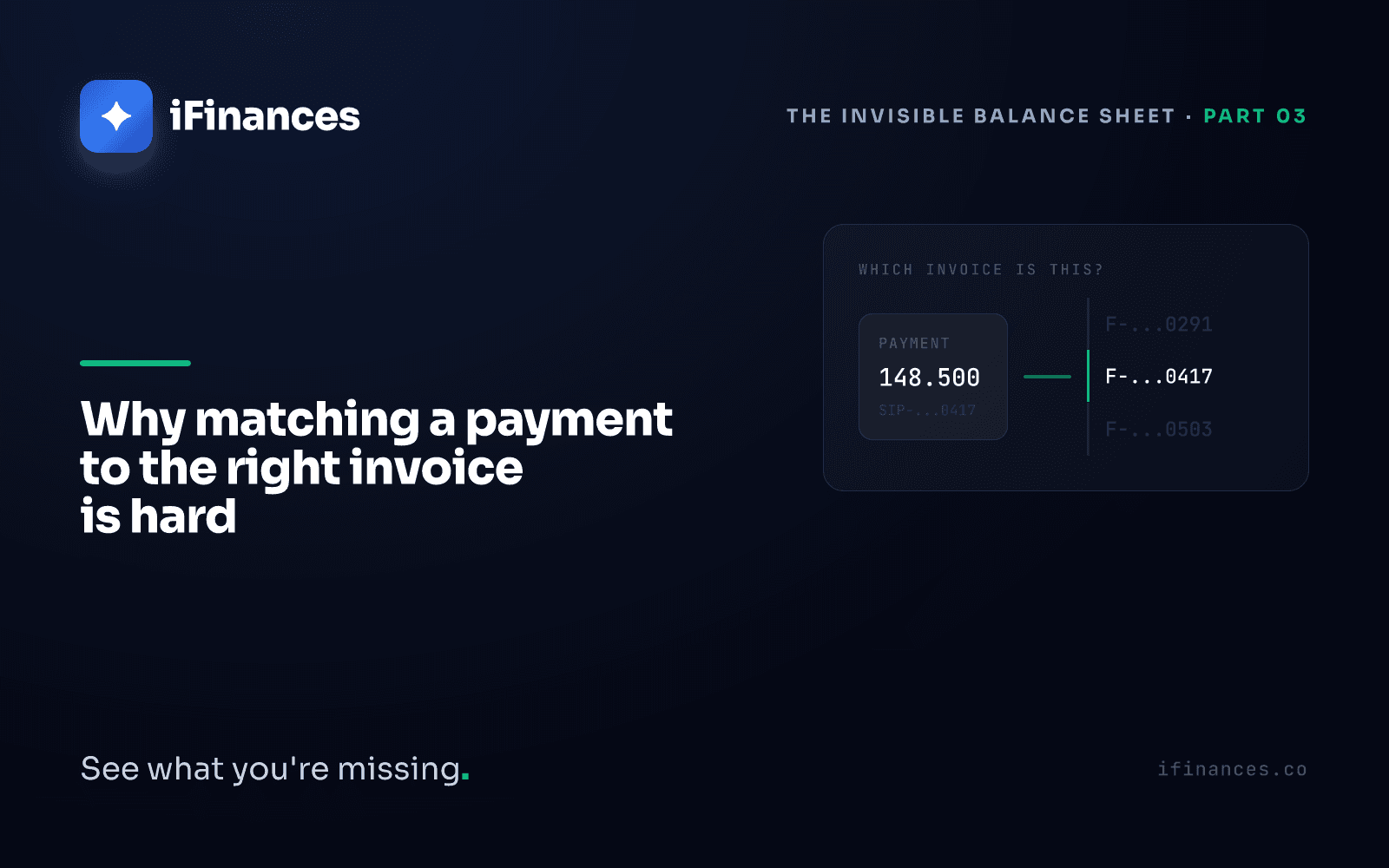
Why Matching a Payment to the Right Invoice Is Hard: FIFO and Partial Payments
"Money arrived" is an event; "which invoice it settled" is a decision. Why partial payments, FIFO and embedded references make invoice-payment matching hard.
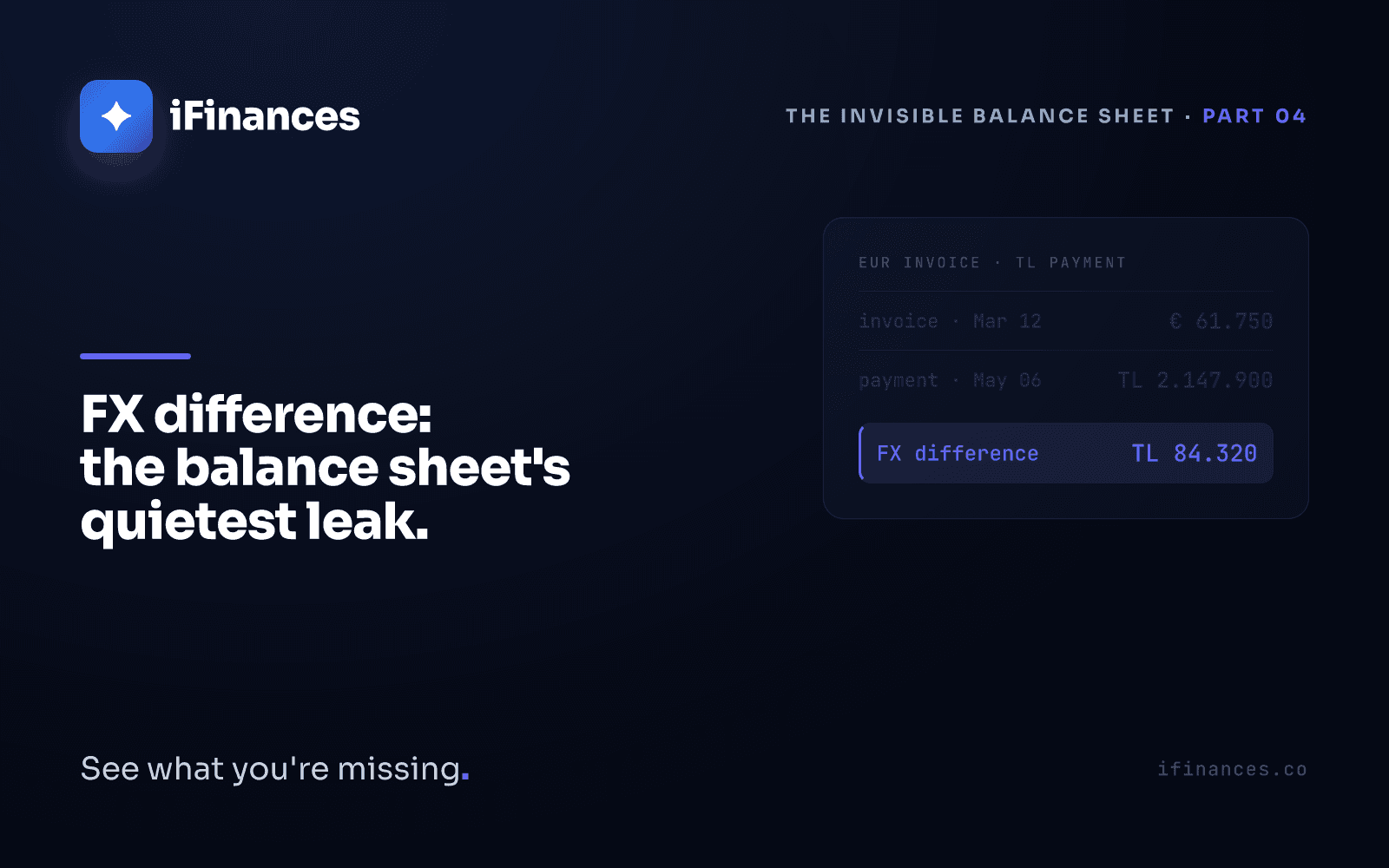
FX Difference: The Silent Leak in Foreign-Currency Reconciliation
A EUR invoice, a TL payment, two different dates. Where did the FX difference go? The anatomy of the silent leak in foreign-currency reconciliation.
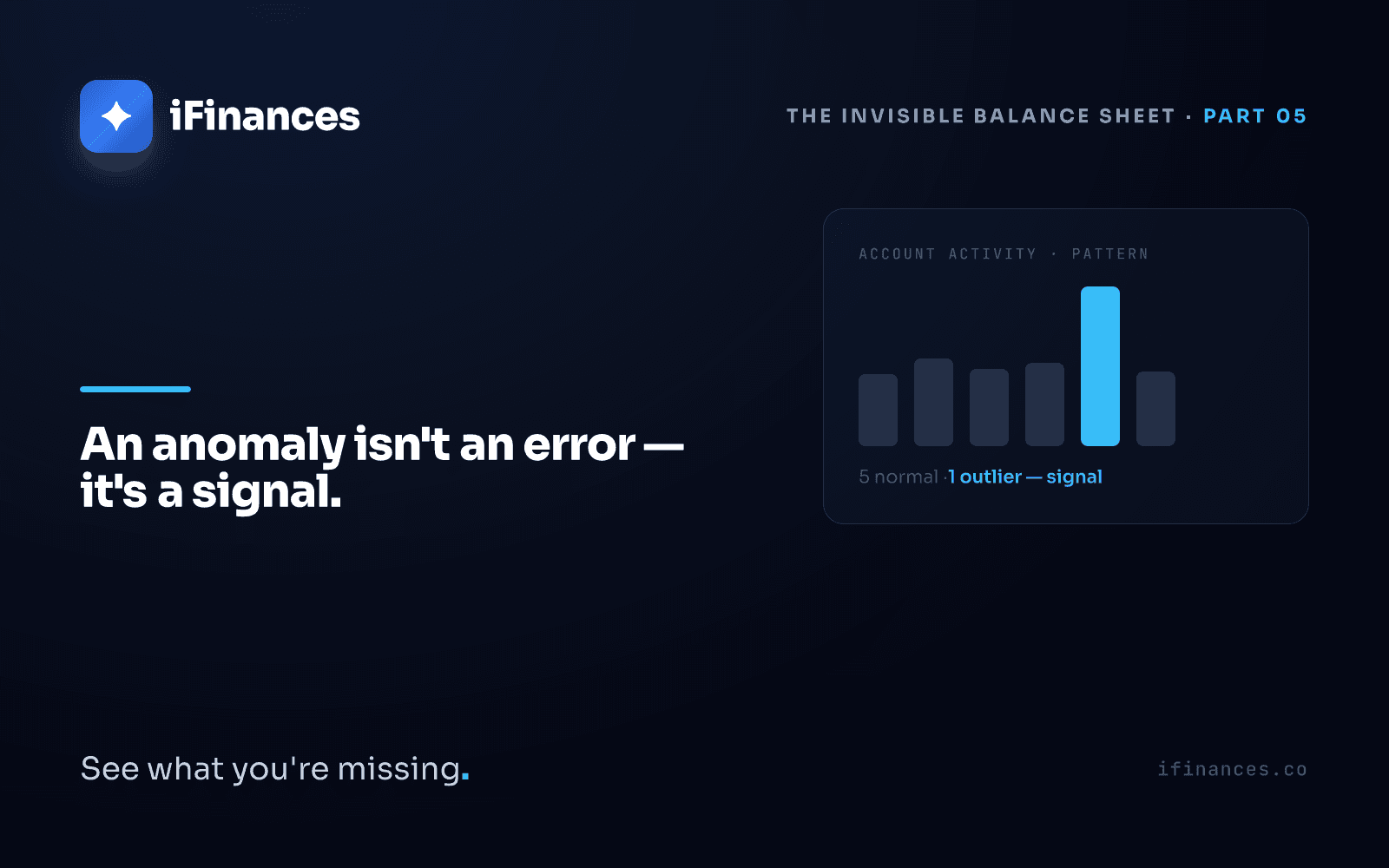
A Financial Anomaly Isn't an Error. It's a Signal.
The urge to delete the outlier line in your ledger is natural. But a financial anomaly isn't an error — it's a signal flagging process gaps, duplicates and phantom debt.
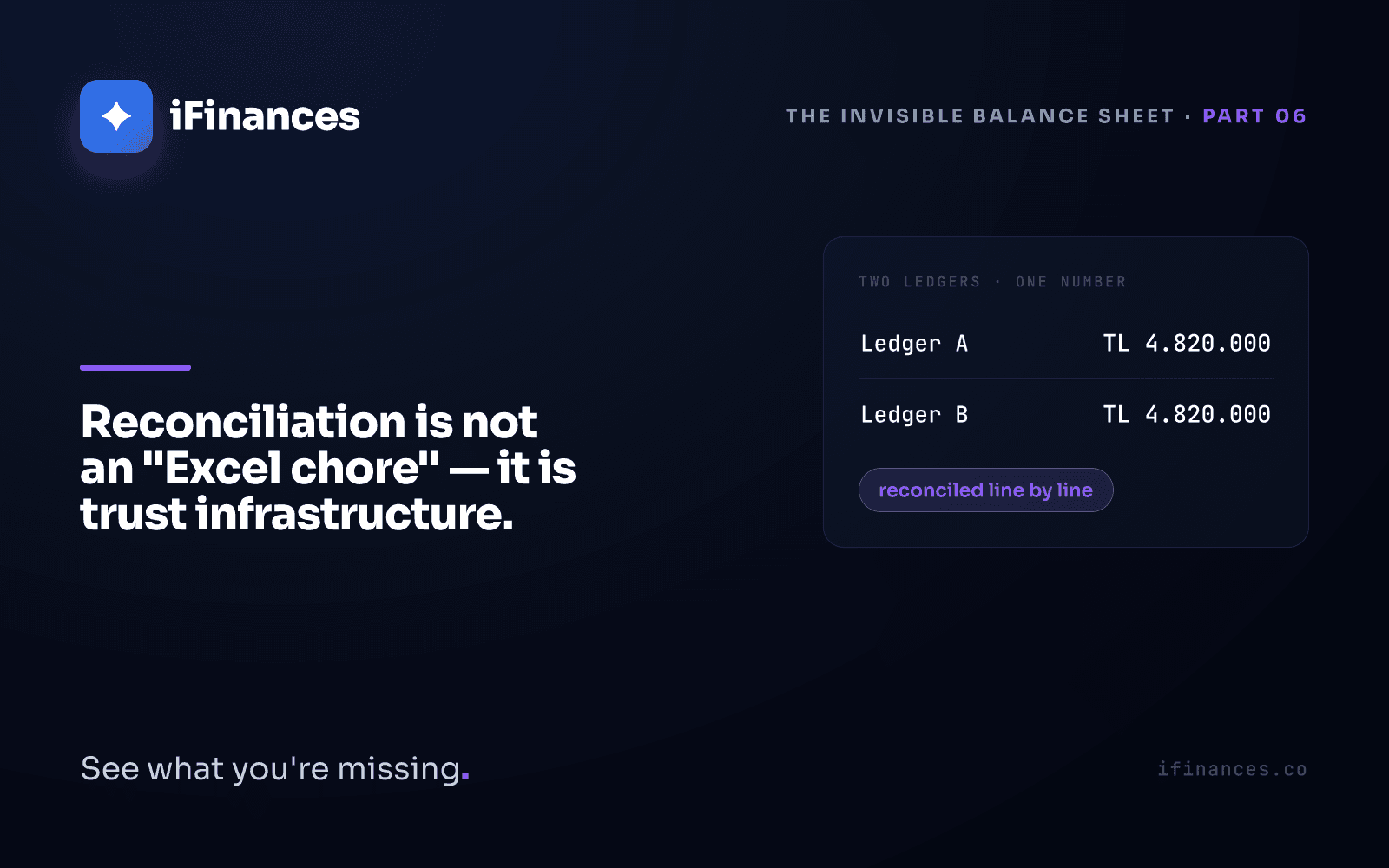
Reconciliation Isn't a Spreadsheet Chore. It's Trust Infrastructure
When two companies agree on the same balance, what they build isn't arithmetic — it's trust. Why reconciliation is infrastructure, not a month-end chore.

What is reconciliation? A complete guide to account, bank and e-invoice reconciliation (2026)
What is reconciliation, what types exist, and which regulations frame it? The full anatomy of account, bank, e-invoice and VAT reconciliation for Turkish finance teams.

Anthropic Claude's 2026 finance use case report: AI takes a seat at the accounting table
How are Anthropic's Claude 4 models entering finance operations in 2025-2026? Five practical use cases for Turkish finance teams, plus the limits and a strategy playbook.

E-reconciliation software in 2026: a comprehensive comparison guide for Turkish companies
The 8 key criteria for choosing e-reconciliation software in 2026, price ranges, the leading solutions, and the native-integration advantages that matter for Turkish companies.

Financial data science: machine learning in reconciliation, anomaly models, and practical use cases
How financial data science fits into the reconciliation process: ML models, anomaly detection algorithms, explainability, and practical applications for Turkish finance teams.

What is three-way reconciliation? Bank + e-invoice + ledger in a single view
Bank statement, e-invoice, and ledger entry — why bringing these three sources together in one table is the foundation of modern finance. The logic and payoffs of three-way reconciliation.

Stripe IPO on the horizon: what does a $91 billion fintech tell us?
What do Stripe's 2026 IPO roadmap and $91 billion valuation tell us about global fintech? A comparison with Türkiye's iyzico, Param, and Paratika.

7 critical reconciliation mistakes in the VAT refund process — and how to fix them
The 7 most common reconciliation mistakes in Türkiye's VAT refund process, and their fixes. Audit-ready refund files, BA-BS compliance, automated checkpoints.

SME digital transformation 2026: a 7-stage roadmap for finance operations
A 2026 digital transformation roadmap for Turkish SMEs. Modernizing finance operations in 7 stages, KOSGEB grants, and real success criteria.

OpenAI GPT-5: has the era of autonomous accounting agents arrived?
How are OpenAI's GPT-5 and its agent ecosystem transforming finance operations? The practical capabilities and limits of autonomous accounting agents — and a roadmap for Turkish companies.

EUR/USD invoice reconciliation with the CBRT official rate: the complete guide
Why is the CBRT official exchange rate the only correct reference for audit-ready reconciliation of EUR and USD invoices? In this guide we walk through the process, the booking method, and the automation.

KOSGEB digital transformation grants 2026: the complete application guide for finance software
KOSGEB's 2026 digital transformation programs: 30-60% grant funding for reconciliation software and e-invoice systems. The application process, required documents, and practical tips.

Async workflows for the hybrid accounting firm
When hybrid work becomes the norm, how does an accounting firm's client coordination go async? Designing a new workflow around 5 principles.

Klarna's AI experiment: one assistant instead of 700 customer service agents
Klarna's OpenAI-powered AI assistant does the work of 700 employees. Five lessons from the experiment for Turkish e-commerce and finance teams.

TÜBİTAK 1507 SME R&D incentives 2026: a roadmap for finance software
Up to 75% non-repayable support for finance software development and customization projects under TÜBİTAK 1507. Application guide, eligibility criteria, and an iFinances example.

E-invoice reconciliation: inbound vs outbound, status tracking, full automation
The technical anatomy of reconciling inbound vs outbound e-invoices, status tracking across the full lifecycle, and the infrastructure required for complete automation.

A SaaS cost optimization guide for accounting firms
How an accounting firm managing 20+ clients can cut its SaaS stack costs by 40%. License optimization, KOSGEB grants, and the alternatives worth considering.

JPMorgan IndexGPT: banks are insourcing finance software
JPMorgan's IndexGPT initiative reveals how major banks are bringing financial AI software in-house. What does it mean for Turkish banks?

The balance sheet impact of reconciliation errors: a 10-year Turkish industry analysis and 8 critical risks
How reconciliation errors hit Turkish company balance sheets: a 10-year industry analysis, 8 critical risk categories, real-world cases, and prevention strategies.

What is financial anomaly detection? Missing invoices, duplicate records, risk scoring
Missing invoices, duplicate records, and inconsistent transactions quietly erode your balance sheet. How does modern anomaly detection work — and why is it incomplete without risk scoring?

EU AI Act 2026: AI compliance in financial software
The EU AI Act's August 2026 enforcement date is approaching. What does the high-risk classification mean for financial AI software? Five preparation steps for Turkish companies.

Account reconciliation vs bank reconciliation: differences, processes, and the path to automation
The key differences between account reconciliation and bank reconciliation, how each process works, the points most often confused, and a practical automation guide for finance teams in Türkiye.

5 reasons to move from Excel to financial intelligence
Excel is still the center of finance. But the real decision-making layer lives elsewhere. Here are 5 reasons.

Brex, Ramp, Pleo: the new generation of corporate spend management
How are the US and EU's new-generation corporate spend fintechs (Brex, Ramp, Pleo) displacing the classic corporate card? Four lessons for Turkish companies, plus the tools available today.

What is e-reconciliation? GİB requirements, BA-BS forms, and a process guide
The Turkish regulatory requirements behind e-reconciliation, the role of the BA-BS form, what GİB expects, and a step-by-step guide to getting your company compliant.

MiCA and EU PSD3: new rules for cross-border finance software
The EU's next-generation regulations — MiCA (crypto) and PSD3 (open banking) — take effect in 2025-2026. A cross-border finance software compliance guide for Turkish companies.

Digital Turkish Lira: what the CBRT's CBDC pilot means for finance software
The CBRT's Digital Turkish Lira pilot expanded in 2026. What CBDC architecture means for finance software, reconciliation, and corporate payment infrastructure.

Reconciliation with the CBRT official rate: what, why, how
The gap between your bank's rate and the CBRT official rate is critical for audit. A detailed guide.

The AI guide for accountants: which tools actually get used in 2026?
Claude, ChatGPT, Devin, Cursor — a practical guide to AI tools for the accounting firm in 2026. 7 use cases and a comparison of 4 tools.

Always ready for a KGK audit: the audit-ready reconciliation setup
There is only one way to avoid year-end panic: be audit-ready every single day. The role of automation in KGK audit preparation, and the anatomy of continuous auditability.

Managing the reconciliation workload during year-end close
How do you manage the reconciliation crunch of the Q4 closing storm? Five principles for team capacity planning, automation prioritization, and audit-ready preparation.

What does explainable AI mean in reconciliation? Black box vs. reasoning chain
Using AI in financial reconciliation is great — but dangerous if it can't explain every decision. What is explainable AI, and why is it becoming the new standard of the audit world?

2026 Turkish tax regulation: 5 changes your finance team needs to know
The 5 major changes in 2026 Turkish tax regulation that hit finance teams directly: the e-Defter mandate, VAT rates, BA-BS form revisions, an impact analysis, and a preparation plan.

How to choose reconciliation software: 7 critical criteria from SME to enterprise
7 concrete criteria for choosing reconciliation software, the real cost of a wrong choice, and a recommendation matrix by company size. An independent guide for CFOs and accountants.

BlackLine alternatives for Türkiye: 5 modern reconciliation options
BlackLine leads the global market, but it was never tailored to Turkish regulation. Five practical alternatives for Turkish companies — and how to choose between them.

A client portfolio management guide for accounting firms
Managing 20+ client companies from a single dashboard — isolated tenants, white-label reporting, and an automation strategy.