You sit down at the table. It is past midnight; in front of you is a board — but it has no squares. It has cells. Your opponent isn't sitting across from you; it never has. It makes its moves while you sleep: a bank line with half a description, an invoice whose exchange rate has shifted, a single amount paid twice. You get tired; it doesn't. You forget; it doesn't. It is in no hurry — time has always been on its side.
You have been playing this game every month for years, and you never gave it a name: the month-end close.
This article will tell you what iFinances is. But first it will answer two more important questions: Who is sitting across from you? And who could sit down on your side of the table?
The invisible opponent
First, meet your opponent. Its memory is flawless: it doesn't forget a half-written line from three years ago. It never sleeps: it plays while you close the books, and it plays while you are away. And it makes thousands of moves a month — every bank transaction, every invoice, every shift in the exchange rate is a move.
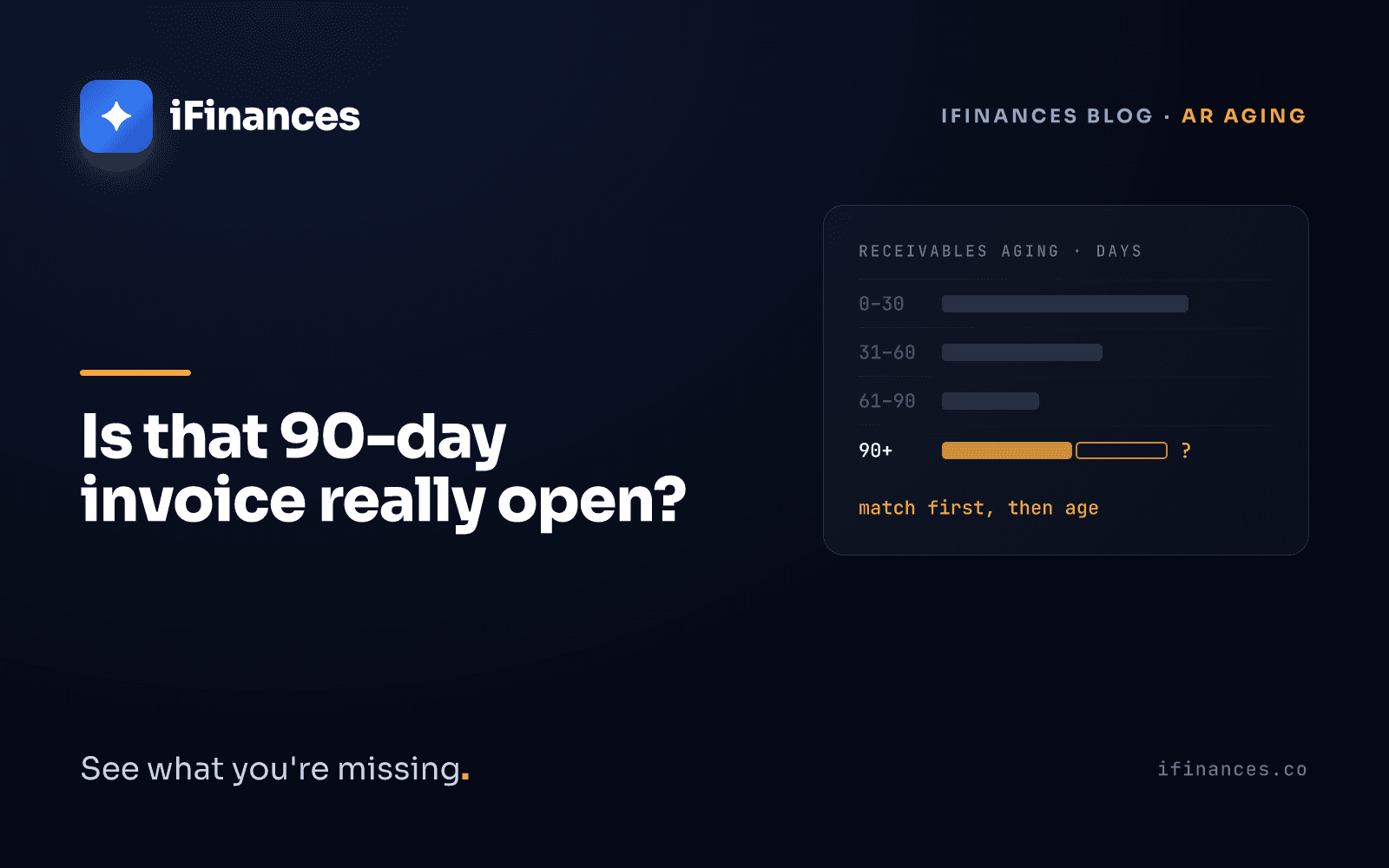
It has a name, too: your opponent is called uncertainty — and its favorite opening is the invoice that shows open even though it has been paid. You know the rest of its repertoire: the quietly accumulating FX difference, the same payment going out twice, the incoming transfer nobody can place. Its most famous opening even has a name of its own: phantom debt.
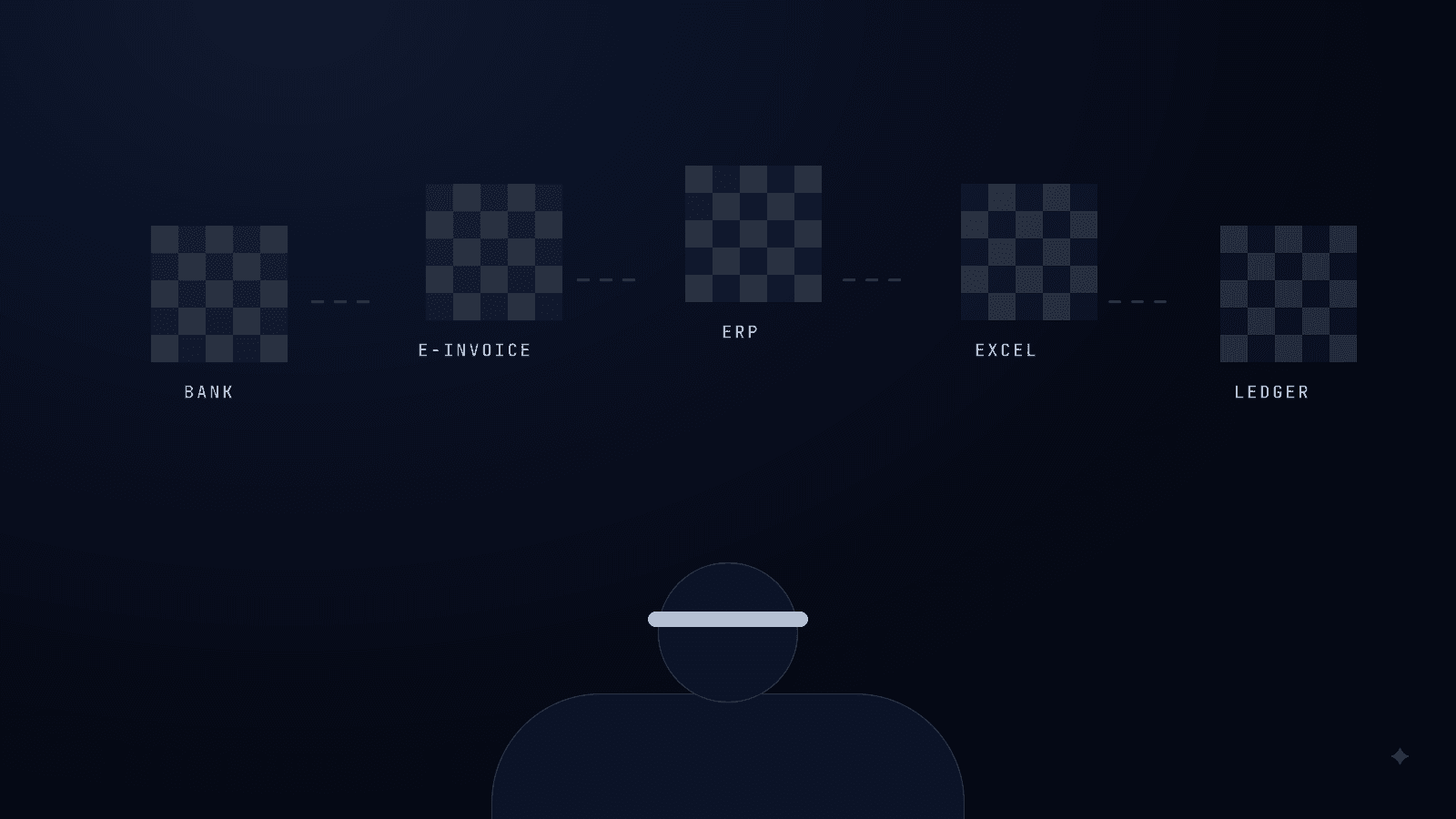
Here is the truly hard part: you are not playing on one board. The bank is a board. E-invoices are a second. The ERP is a third, Excel a fourth, the ledger a fifth. You are playing five boards at once, and no board can see the others. In chess this is called a blindfold simultaneous — a discipline even the greatest masters can sustain for only a few hours. You play it every month. Blindfolded. On five boards. At once.
Set the metaphor aside for a moment and look at this line:
02.07 · INCOMING EFT · 00082-4471 PROGRESS PMT PART— ACCT CONF · 486,250.00
Who sent it? Which job is it for? Which invoice does it settle, and for how much? The description is cut short, the reference is missing, the amount matches no invoice exactly. You know this line. There are dozens like it on your screen every month — and each one is one of your opponent's silent moves.
One night, one morning
In 1997, when a world champion laid down his pieces after a nineteen-move game and walked away from the table, everyone thought an era had ended.
What had ended was nothing; what had opened was a door. After that night, the interesting thing in chess was never that the machine won; it was that people crossed over to the machine's side. Today the strongest players in the world prepare with the machine and test their moves with the machine; a human playing with the machine is stronger than anyone playing alone. Chess did not learn its real lesson the night it lost to the machine; the real lesson came the morning people crossed over to the machine's side.

That door opened for chess thirty years ago. For finance, it is only opening now — and if you are reading these lines, you are among the early witnesses of the crossing. Your competitors are still sitting at that table alone: five boards, blindfolded.
So who could sit down on your side of the table?
What is iFinances?
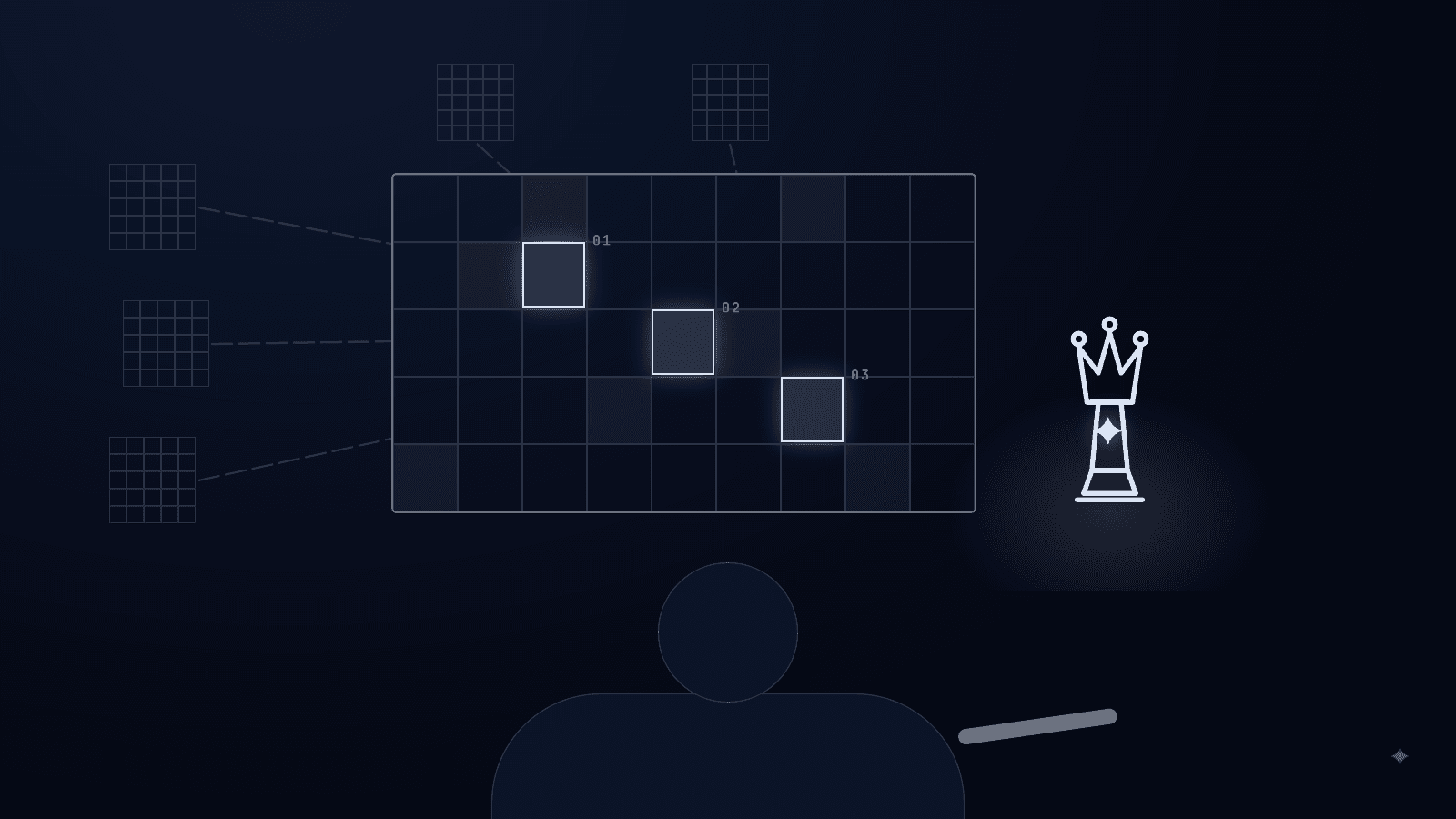
iFinances is not an accounting program, not an ERP, not a reporting tool; it is a financial intelligence layer that brings your bank, e-invoices, ERP, Excel and ledger together on a single board. That is the definition on paper. But what is really worth telling is its first night.
The night the machine sits down at your table — and this is not a heavy software project, it is closer to setting a table — it makes its first move: it folds five boards into one. Your bank transactions, your e-invoices and your ledger entries sit side by side in one table for the first time; foreign-currency lines are translated into the same language at the official rate (this move is called Reconciliation).
Its second move comes toward morning: next to every payment, it places the invoice that payment settled. It does not do this as a black box; it writes down the reasoning — the amount aligns, the date agrees, the reference in the description points to this invoice. And when it is not sure, it says it is not sure (this move is called Payment Matching).
Its third move changes the rhythm of the game: it announces the line that breaks the pattern while the piece is still in your hand. A missing entry, a duplicate payment, an amount that defies its pattern, a collection running late — each arrives already flagged, before you ask (this move is called Anomaly Detection).
What you see on the screen that morning is, for the first time, the whole of the game you have been playing for years: every square of the board and the reasoning behind every piece, all at once, in front of you.
The hand that moves the piece
The question on your mind is obvious: who is in control?
You are. iFinances never touches your data; it reads it where it lives. It writes to no record and closes no line on its own. It shows, it suggests, it explains its reasoning — and it waits. Until you approve, no match is final. The machine lights the board; the hand that moves the piece is always human.

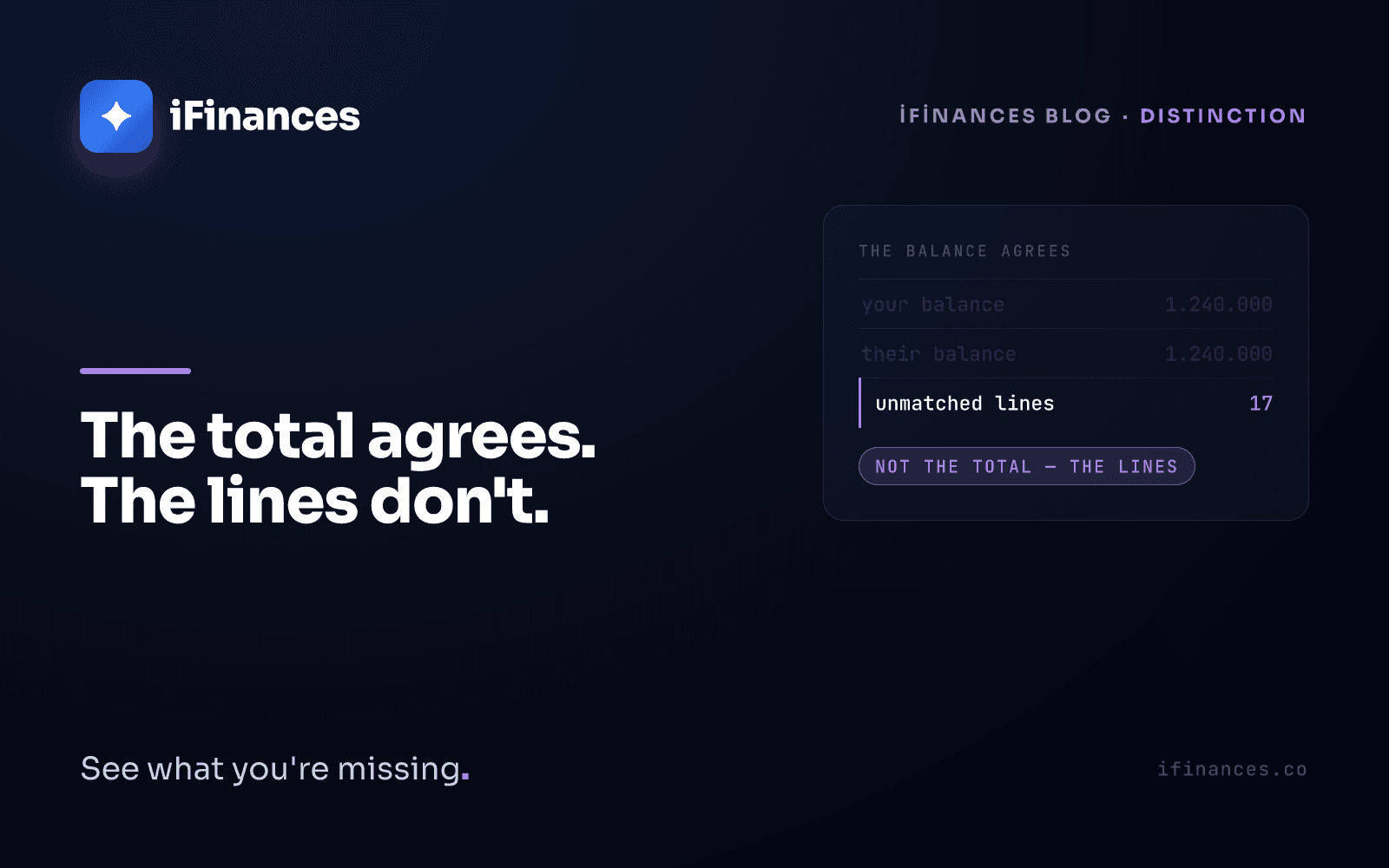
The same distinction holds for your reconciliation with the tax authority. E-reconciliation confirms the total; iFinances shows what is inside that total — which payment settled which invoice, which line is truly open. They do not replace each other: one seals the result, the other tells the story.
One scene explains this better than any definition. In its first week at one company, the machine found a payment nobody had claimed for years: money had arrived, attached itself to no invoice, and was quietly carried over from close to close. The accounting manager who read the reasoning on the screen said one thing first: "Wait — we had looked for this." And it was the manager who closed the line. The machine found it; a human decided.
The sound of month-end
So what does the month-end close feel like when the machine is on your side?
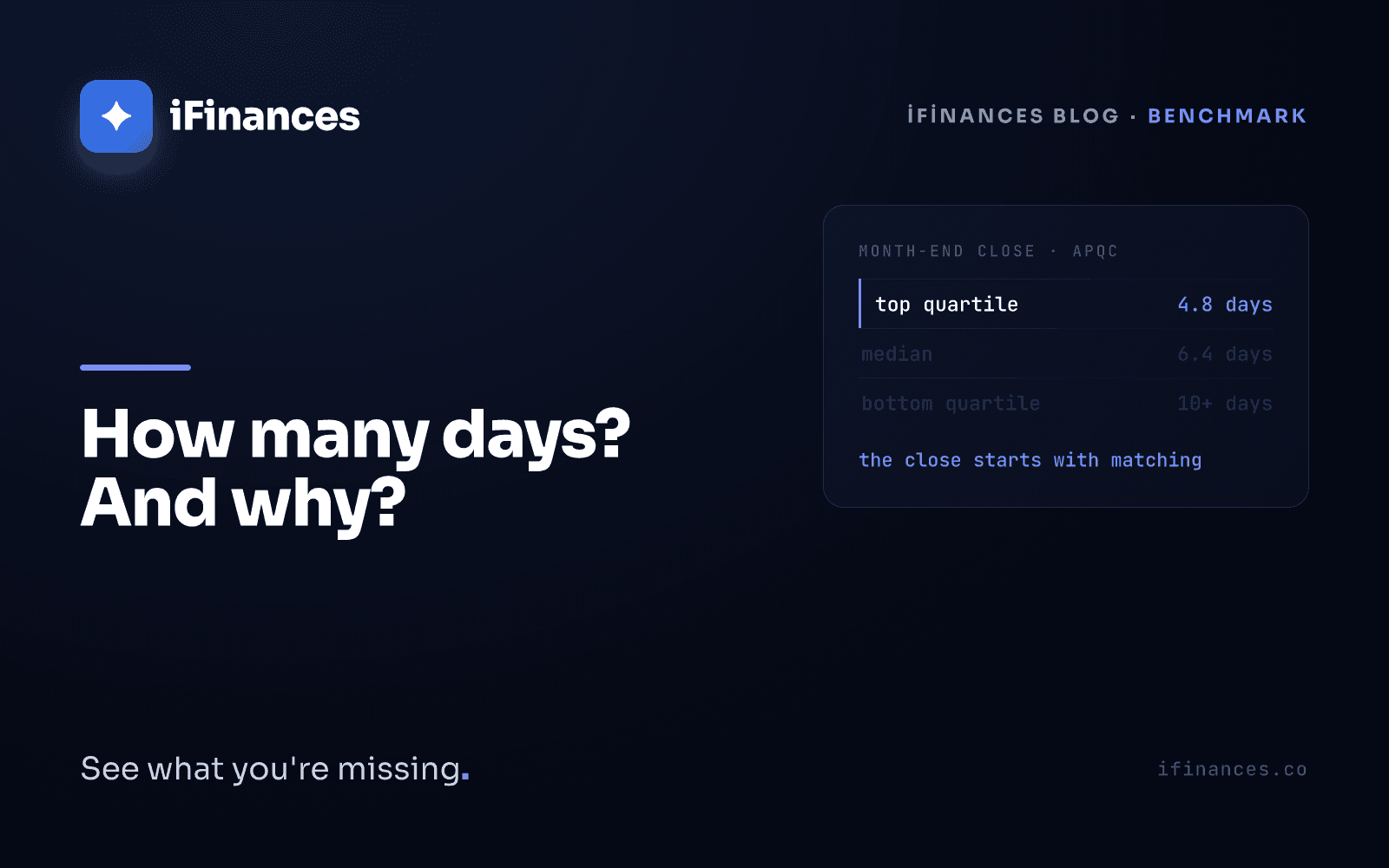
The first thing that changes is the sound. The long nights spent between five screens turn into an evening that ends early. The phone does not ring to ask "did you close that invoice on your side". Monday morning begins not with a surprise but with a few flags, each with its reasoning written next to it: look at this, here is why, this line is waiting for your decision.
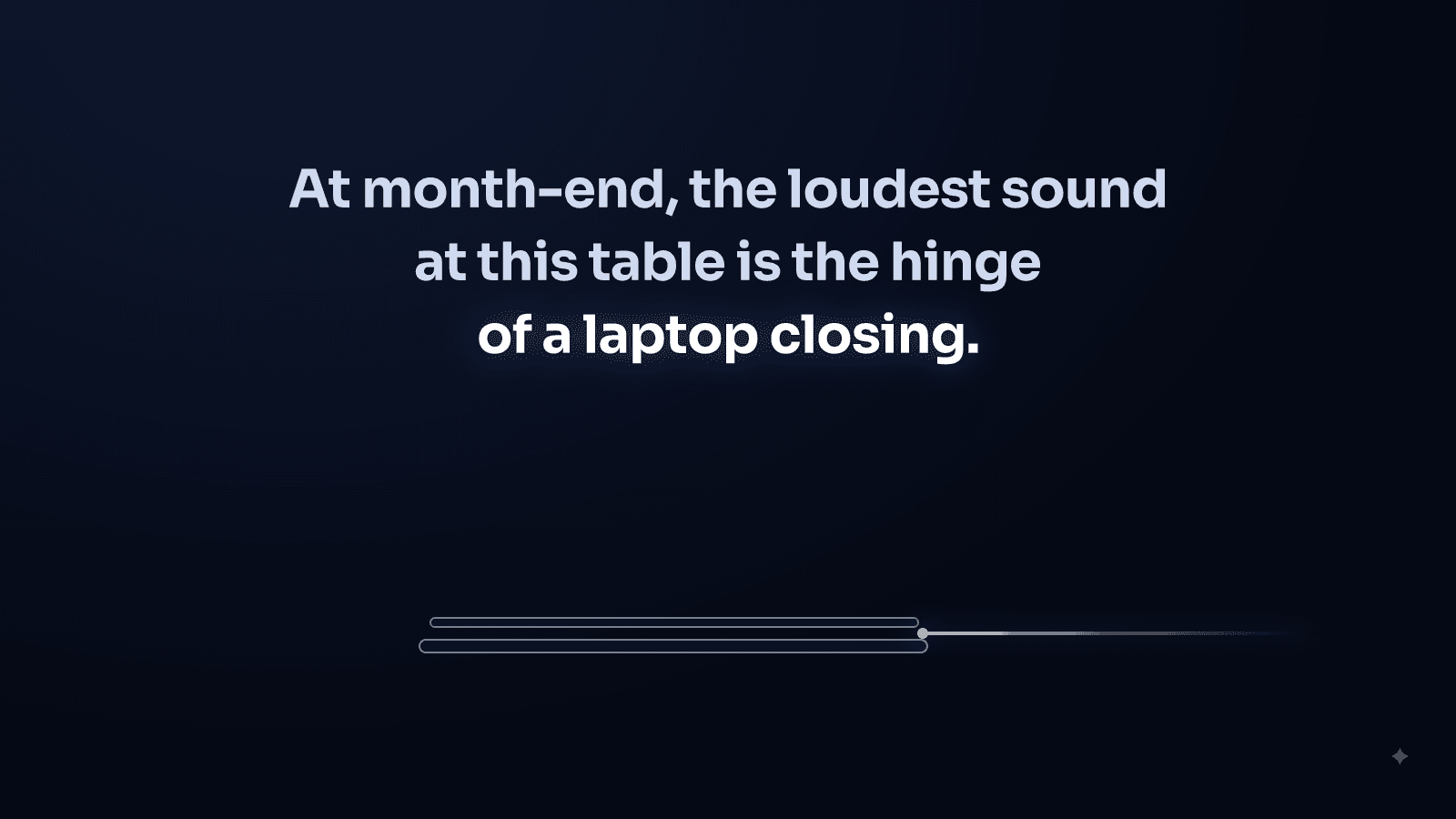
At month-end, the loudest sound at this table is the hinge of a laptop closing.
And that silence is not empty; it is room to think. The hours once spent making numbers agree now look at the next move: growth, negotiation, investment. Anyone can keep the numbers. Whoever sees the truth moves ahead of the game.
Frequently asked questions
Before you make your move — the questions asked most.
Is iFinances an accounting program?
No. iFinances doesn't replace your accounting software, your ERP or your Excel; it sits on top of them and brings them together. It keeps no books and creates no records — it reads, matches and verifies what you already have.
Does it touch our data?
No. iFinances reads your data where it lives and writes to nothing. It shows, suggests and explains its reasoning — until you approve, no line counts as closed.
We already use e-reconciliation — why iFinances?
E-reconciliation confirms the total balance with your counterparty. iFinances shows what is inside that total: which payment settled which invoice, which line is truly open. They don't replace each other; they complement each other.
Is onboarding a heavy IT project?
No. iFinances connects to your existing systems and settles in within about a week. In the first meeting, on your own data, you watch what matches what within half an hour.
What about foreign-currency transactions?
Foreign-currency invoices and payments meet in the same table, in the same language, at the official exchange rate. The FX difference stops being a silent leak and becomes a visible line with its reasoning written next to it.
Your opponent has not read this article; it cannot. But it has already made its move: right now, in one of your five systems, a line with half a description is quietly waiting. It is good at waiting — that is all it has done for years.
We have made our move, too: we placed a chair on your side of the table.

We are asking for thirty minutes — not for our slides, for your data. Your own bank, your own invoices, your own ledger; we set up the board, you only need to pick a time. And bring your accounting manager: at the moment the thing they have been trying to explain for years finally becomes visible to everyone, theirs is the face you will want to watch.
Your move.
Frequently Asked Questions
Is iFinances an accounting program?
No. iFinances doesn't replace your accounting software, your ERP or your Excel; it sits on top of them and brings them together. It keeps no books and creates no records — it reads, matches and verifies what you already have.
Does it touch our data?
No. iFinances reads your data where it lives and writes to nothing. It shows, suggests and explains its reasoning — until you approve, no line counts as closed.
We already use e-reconciliation — why iFinances?
E-reconciliation confirms the total balance with your counterparty. iFinances shows what is inside that total: which payment settled which invoice, which line is truly open. They don't replace each other; they complement each other.
Is onboarding a heavy IT project?
No. iFinances connects to your existing systems and settles in within about a week. In the first meeting, on your own data, you watch what matches what within half an hour.
What about foreign-currency transactions?
Foreign-currency invoices and payments meet in the same table, in the same language, at the official exchange rate. The FX difference stops being a silent leak and becomes a visible line with its reasoning written next to it.
✦ iFinances — See what you're missing.